Limestone Logs 2017
Welcome to our 28th Field Season of research and monitoring on East Limestone Island!
The Limestone Logs are a series of newsletters sent out every two weeks from East Limestone Island Field Station. Check back every few weeks to see what animals we've been encountering, to read more about our wildlife research methods, and to hear fun stories from our interns, volunteers, and school group visitors! So far we have updates on Ancient Murrelets, Whales, Pigeon Guillemots, Cassin Auklet's, Sea Lions, and more! Read our first Limestone Log of 2017 here.

Our Afterschool Bird Club
This past fall, Laskeek Bay and the Haida Gwaii Recreation Commission piloted a new partnership that allowed us to offer an after school "Hike, Build & Bird" club for students in Grades 3/4, and 5/6/7. Lindsay and Viv met the older group on Thursdays, while Colleen and Midori took the younger group on Thursdays. Together, we improved our bird identification skills through hikes, crafts, surveys, games and discussions.


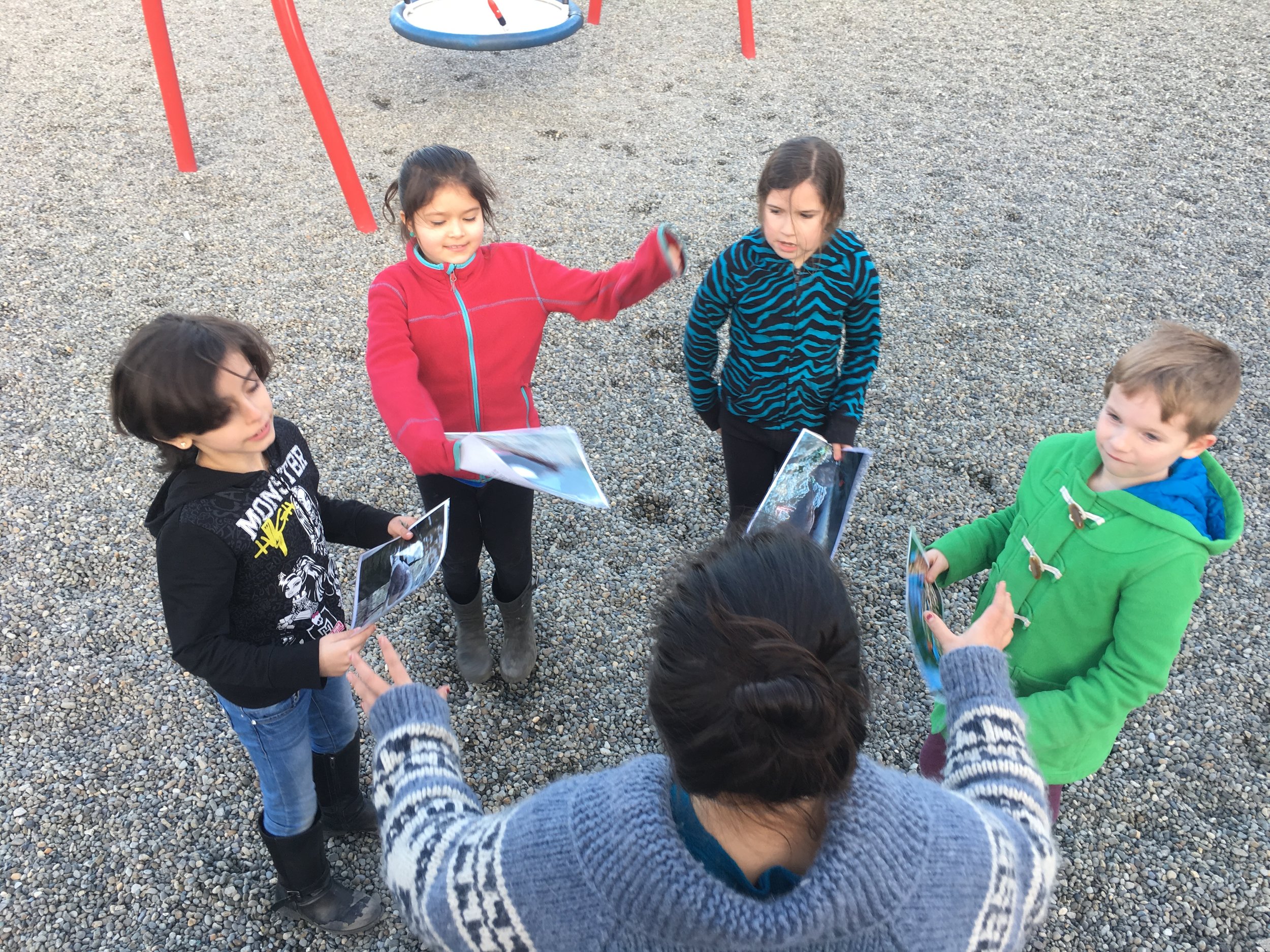
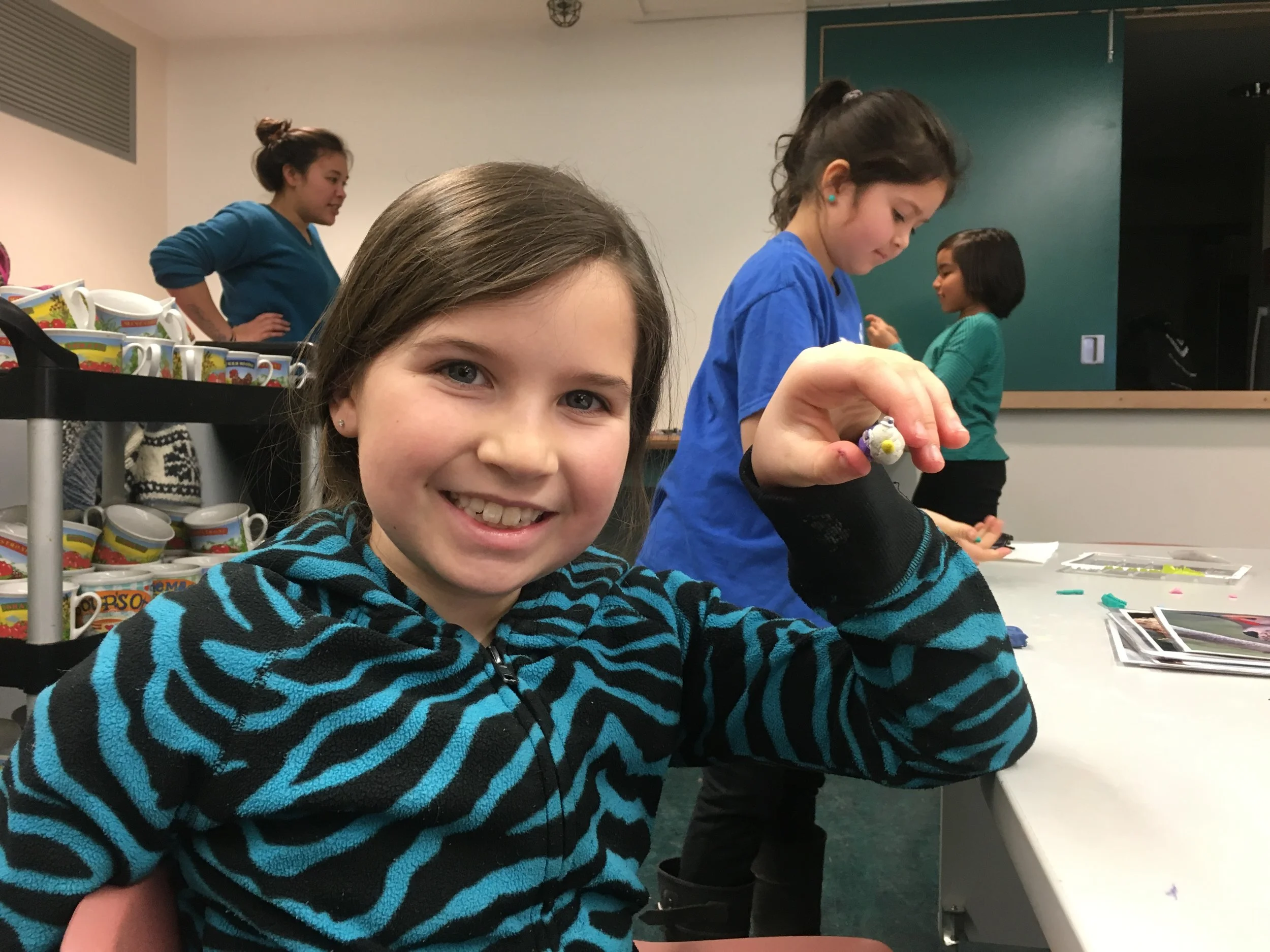
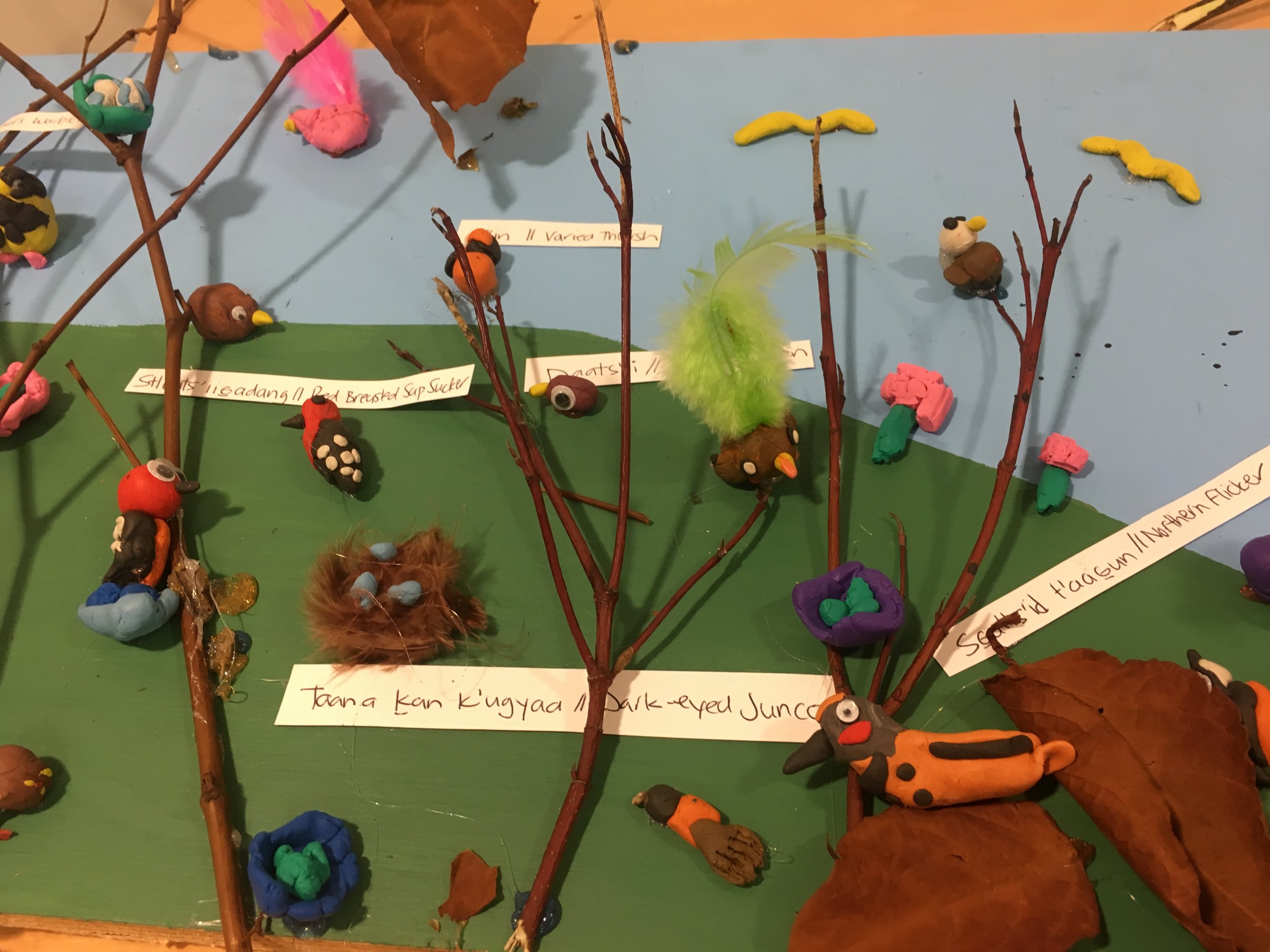
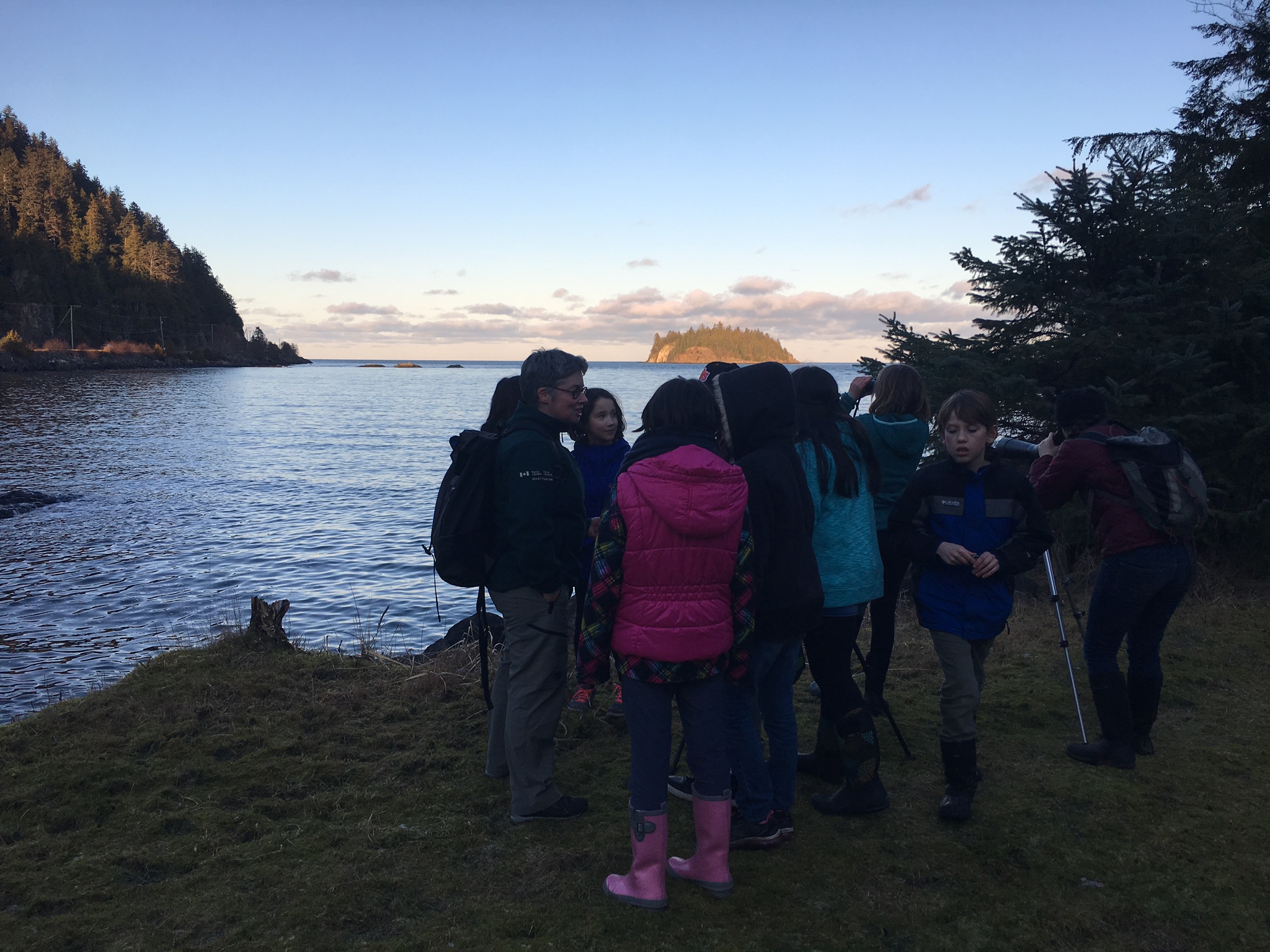


At our final club meeting, Carey helped us use the eBird app to track our sightings as we walked around the Haida Heritage Centre. It's online for those interested in seeing exactly what we saw!
Thank you so much to everyone who helped us bring this club together: Colleen Fuhrman, Midori Campos, Karen Devitt from Bird Studies Canada, Carey Bergman from Gwaii Haanas, the Skidegate Haida Immersion Program, and Laura Bishop from Haida Gwaii Recreation Commission. We look forward to bringing this club back next year - and we hope to see some of our birders on East Limestone Island this coming summer!
Planning for 2017
2016 marked our 27th field season on East Limestone Island and over that time, we have seen considerable changes both in the natural world and in our organization. As a result, the LBCS board, staff and scientific advisors have once again embarked on some careful organizational planning with guidance from the local scientific community on Haida Gwaii over the course of 2016.
As we draft our plans for 2017, we wanted to share a few thoughts about some minor programming changes that will occur this coming year. We want to stress that these changes will not markedly alter our volunteer experience, and we very much look forward to hosting a new team on East Limestone Island from May 4 – July 21, 2017!
Ancient Murrelet Monitoring & Restoration
On East Limestone Island, we have been watching a continuous decline in the breeding population of Ancient Murrelets (ANMU) since monitoring began in 1990. In 2016, as in 2015, the number of chicks departing from the colony was very low and there was also an apparent drop in adult ANMU activity in the colony. Due to the many interacting factors that could be influencing the breeding population on ELI, such as impacts of heavy raccoon predation in the 1990s, recent habitat changes due to major blowdown, and larger-scale changes to the marine environment including ocean warming, it will be hard for us to determine the exact cause of the population decline on the island.
What we do know is that the energy required to manually monitor the funnels with volunteers each night is yielding a diminishing return and as a result, we will begin to transition over to camera-based monitoring of the funnels.
Volunteers and staff will still monitor funnels every other night in order to help us understand the accuracy of cameras, and Project Limestone, our program for local students, will continue to monitor ANMUs in person as they have in the past. We appreciate the support of the Habitat Conservation Trust Fund and BC Gaming for this project.
Last year we also decided to suspend our call-playback program until we have had time to evaluate the potential effectiveness and the practicality of using this seabird colony restoration technique on ELI. This suspension will continue for the 2017 field season.
We will continue our annual raccoon cull, which is conducted in February or March and reduces the numbers of this introduced predator near the Limestone Island seabird colony. We will attempt to lead a second cull during this period, in order to enhance our impact.

Black Oystercatchers
In 1992, we began surveying Black Oystercatchers (BLOY) in Laskeek Bay. In 2010, we began an annual survey of the species at the south end of Lyell Island in partnership with Gwaii Haanas. Starting this year, that survey will occur every second year. We will however continue to independently survey BLOYs in Laskeek Bay annually. This has given us lots of interesting information, including the fact that our oldest recorded breeding bird is 18 years old!

Invasive & Rare Plants
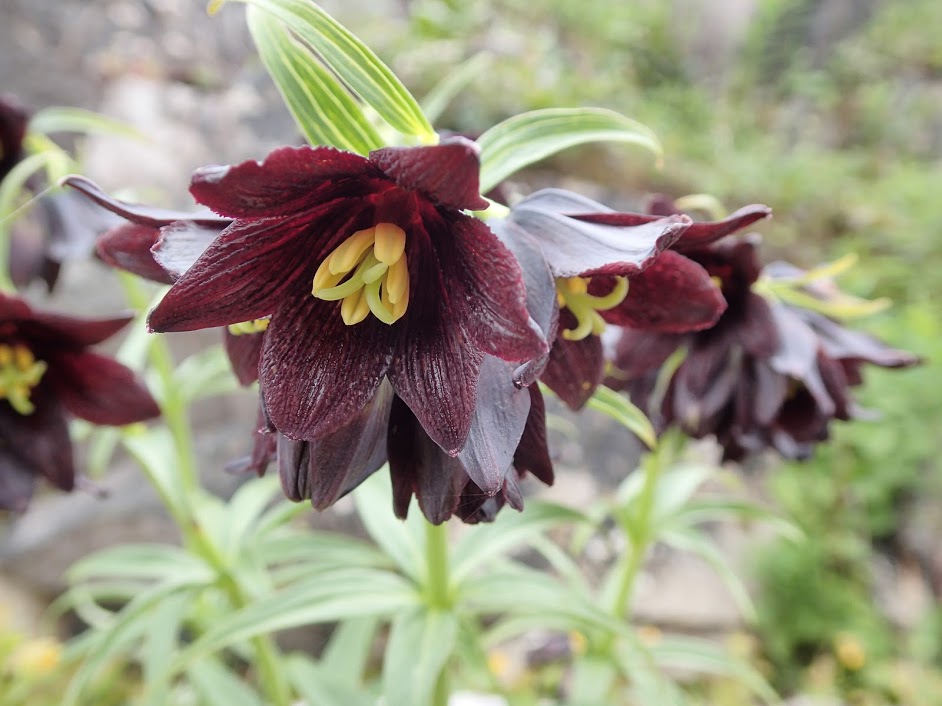
In 2016, we re-invigorated a project from 2009 to inventory and remove invasive plants in Laskeek Bay. Thanks to the support of Environment Canada’s Eco-Action program, this project will continue until at least 2018. We will continue to inventory and remove invasive plants at key locations in the K’uuna Gwaay Conservancy, and we will update our inventory of rare plants on ELI.
Pigeon Guillemot & Cassin’s Auklet Nestboxes
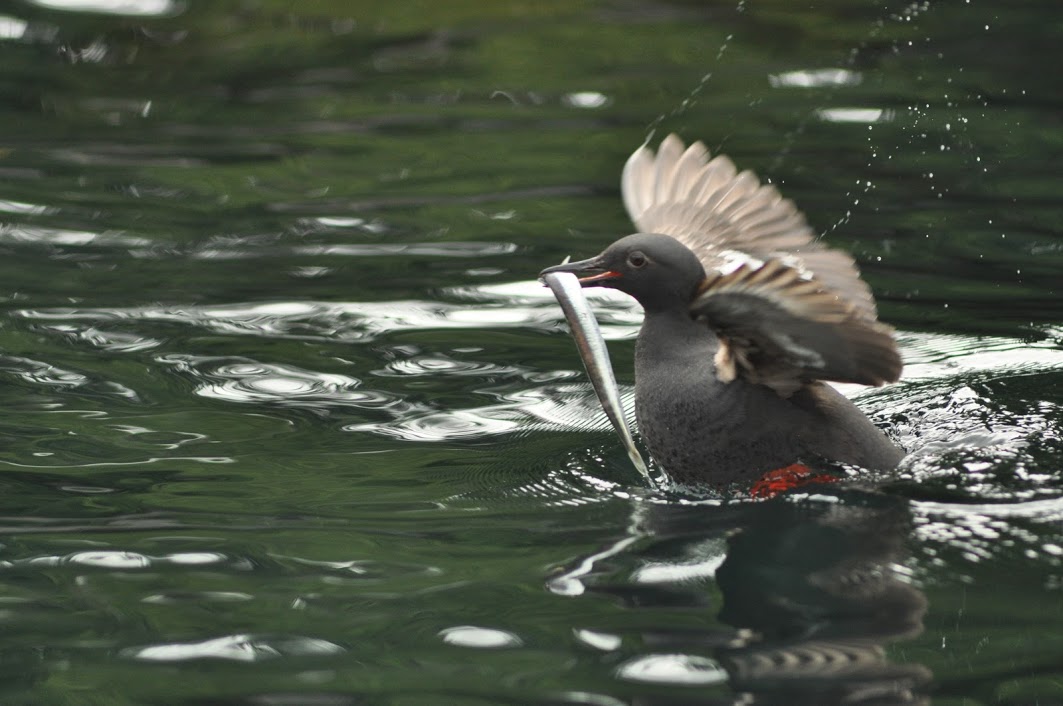
In 2015, LBCS noted mass abandonment of the Pigeon Guillemot nest boxes on Lookout Point. Given the high temperatures witnessed that season, the leading theory for this abandonment was that the nestboxes were overheating. In 2016, we conducted an experiment to measure the temperature in nestboxes (some with new shades, some unchanged) relative to rock crevices that PIGUs would likely nest in. This study showed no huge difference in temperature, and showed that the shades do help to keep the boxes cooler. However, in 2016, eggs were again abandoned during incubation. We now suspect that disturbance by some avian predator in the vicinity of the nestboxes may have been involved. In May of 2017 volunteers, staff and cameras will be used to monitor the boxes to hopefully determine what is causing the abandonment. If we cannot confirm the cause or mitigate the problem, we will close up the boxes by the end of May, before the PIGUs begin to lay their eggs.
The monitoring of Cassin’s Auklet nestboxes on Lookout Point and on the East Coast continue to be successful and monitoring efforts will be unchanged.
Debris Removal
In 2016, BC Parks supported a project aimed at removing debris that washes up on beaches in Laskeek Bay. Our team spent a few weeks surveying shorelines, setting up transects for future accumulation assessment, and collecting up garbage. In 2017, we will continue this initiative independently.

And the Rest…
The remainder of our programs on East Limestone Island will remain essentially unchanged. This includes the at-sea surveys (near and off shore), wildlife trees, the daily bird checklists, the marine mammal sightings and the gull colony surveys.
And with that, we have a plan for 2017! We want to thank the friends and advisors who have provided input on the direction of our organization, and we want to thank the numerous donors and funders who make our work possible. If you have any questions or comments about our plan, we welcome feedback by e-mail (Laskeek@laskeekbay.org).
We look forward to sharing more information with you as our field season progresses – and until then, stay tuned for updates about activities we host in the community including our afterschool Hike, Build & Bird club with Haida Gwaii Rec!
The 2016 Field Season Summary is Here!
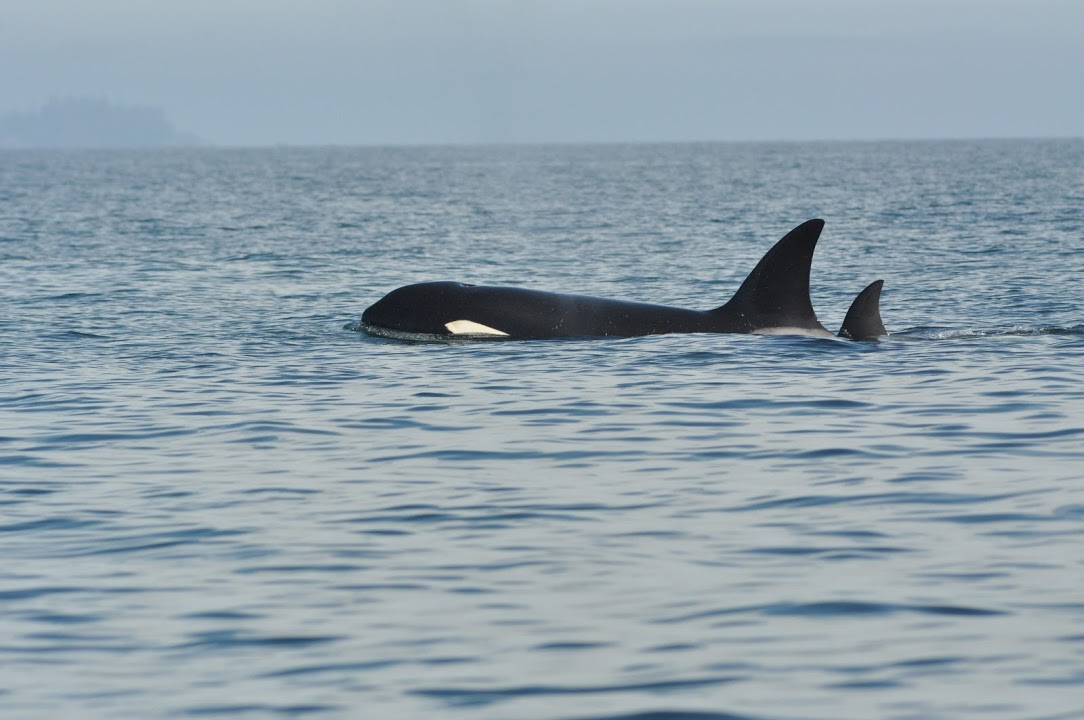
The last step of wrapping up our 27th season is to publish our annual field season summary. Viv has worked very hard over the last few weeks to bring together a report that captures our programs, findings and volunteers. Thank you to all who supported us this year - we cannot wait for our 28th season to begin!

Our 2016 Interns & Their Research!
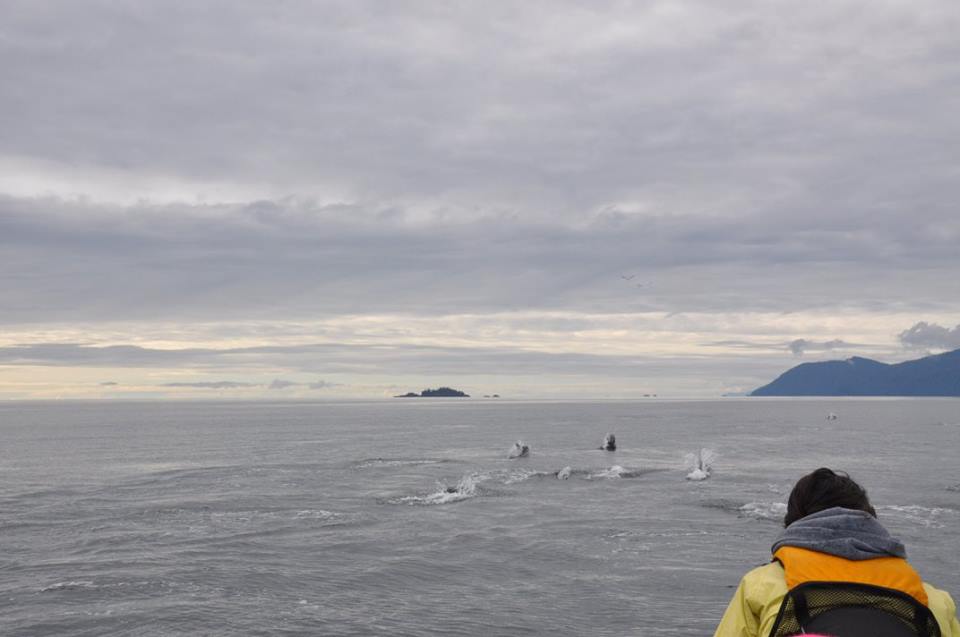
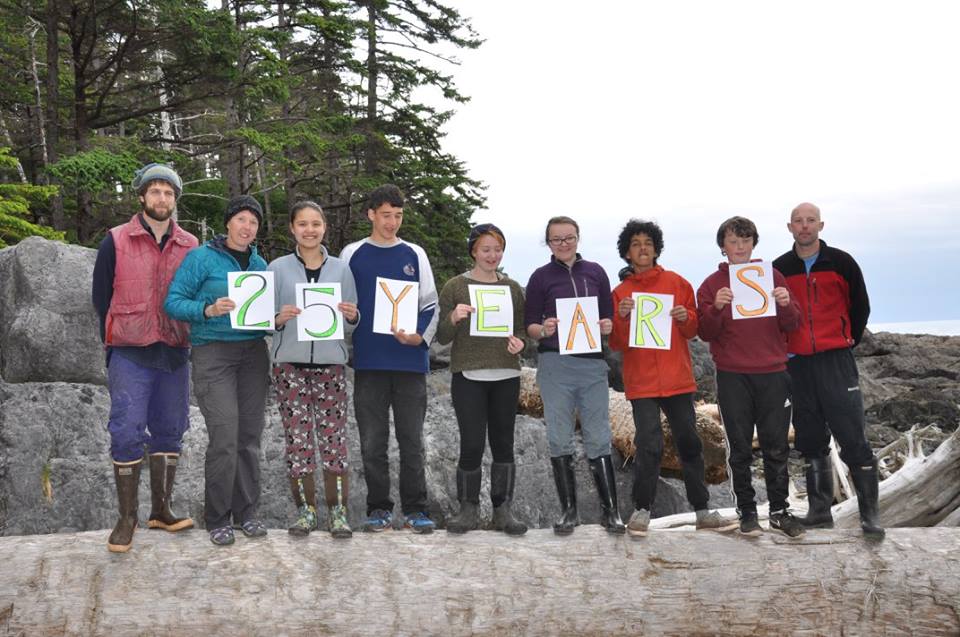
Every year, we welcome interns to East Limestone Island for four weeks at a time. These individuals are typically nearing the end of their undergraduate studies, and their focus is often on biology, environmental studies or resource management. Over the course of their month on ELI, they are trained in a variety of research methods, and they learn aboutlife on a remote research station. In turn, they become essential members of our team and we couldn't complete all our work without them!
“Being able to spend 4 weeks on East Limestone enabled me to contribute more to the projects and see their development. I felt like a valued member of the team, having become more confident and efficient in my tasks. I am very grateful for the skills I acquired, my fellow team members who were so open and helpful, and the beautiful environment where I was able to spend time with seabirds and other local creatures. I was also able to complete a research project.”
This season, we had two fantastic students join us: Ruby Pyke (UBC) and Terra Hauser (Quest University). Ruby was our first intern to take advantage of the SFU accreditation option, meaning she earned course credit for her time with us. We're VERY excited to share her final report exploring inter-annual variation in growth rates of Cassin's Aucklet Chicks on ELI.
Season Finale for the Limestone Logs!
The ELI crew is back in town, safe and sound, after an awesome season! It went by fast and we are already looking forward to next year. Thank you to everyone who supported and followed us during 2016. This is the final Limestone Log for now, but we will be back at it next year. Have a wonderful fall everyone and keep an eye out for your favourite seabirds!

What has been happening on East Limestone Island?
The past 2 weeks have been a busy time at the East Limestone Island field camp! We have now wrapped up all Ancient Murrelet monitoring for the year, and we are continuing with wildlife trees and Cassin’s Auklet nestbox monitoring. We are also getting going on some new projects, including invasive plant surveys, and beach debris cleanup.
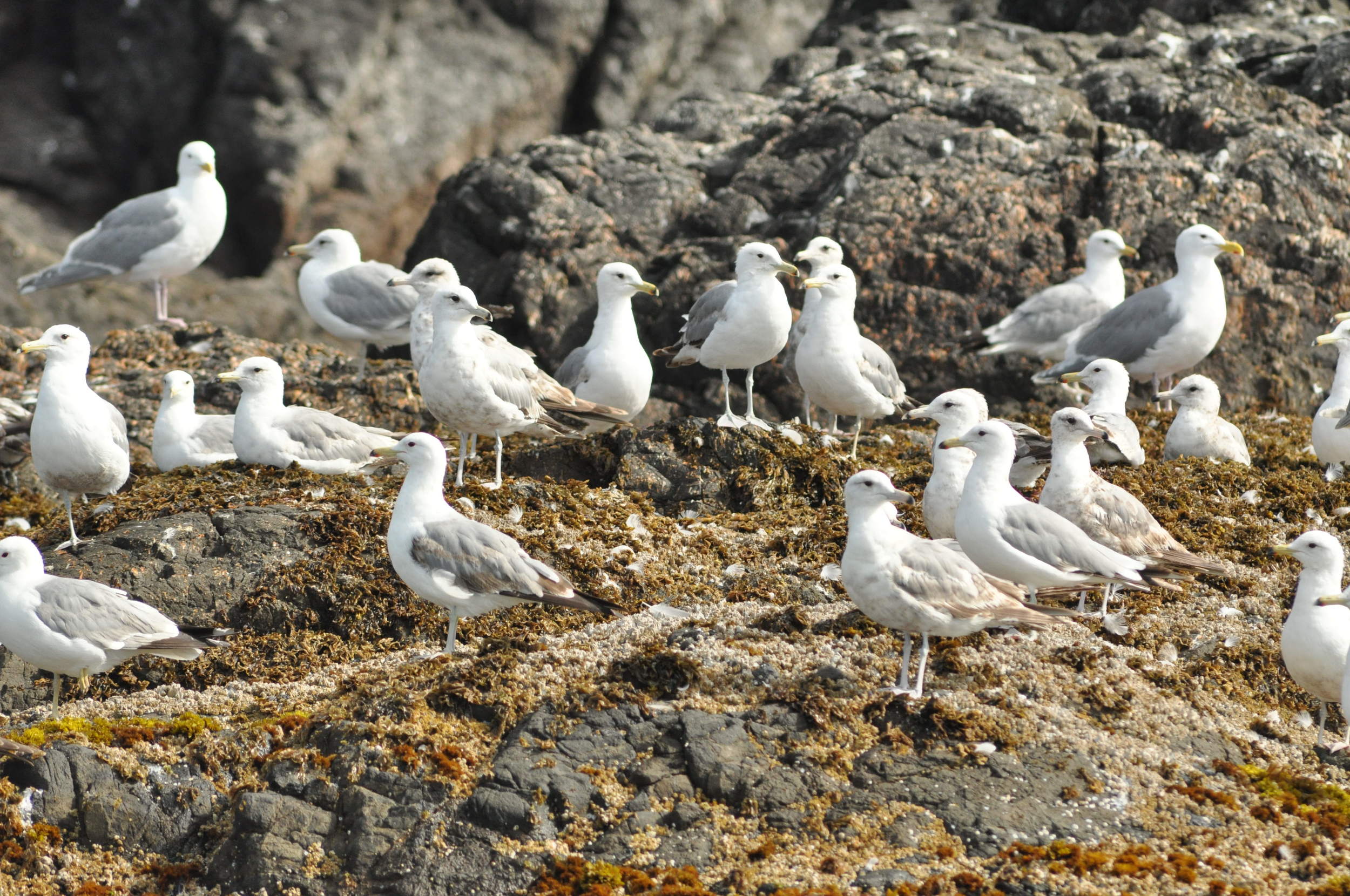
Volunteer Reflections: Sari
May 27, 2016
My Week with Laskeek!
This most recent blog post is from one of our dedicated volunteers, Sari Raber. She was with our team on East Limestone Island from May 27 - June 3. Here is her creative representation of her time spent with Laskeek Bay Conservation Society!

Meanwhile, on ELI...
With the tasks of camp setup behind us, weeks three and four of the LBCS 2016 field season have seen the continuation of many core projects, as well as the arrival of new visitors to the camp on East Limestone Island (ELI). Monitoring for chicks in Cassin’s Auklet burrows has begun and the season’s first sea surveys have taken place. In addition, the end of the school year marks the beginning of the schools from around Haida Gwaii making their year-end trips to visit ELI and to assist with the Ancient Murrelet monitoring. Here are some project highlights from the past two weeks.

The 2016 Field Season Begins!
After weeks of preparation, the last Friday of April saw two vessels worth of food, equipment, and field crews depart the Queen Charlotte docks bound for Limestone Island and the beginning of the 27th field season for the Laskeek Bay Conservation Society (LBCS). Leading the charge was Captain Jeremie Hyatt, whose sailboat Kode Isle brought volunteer crew member Ryan and Limestone volunteers David, Reina, and Avasouth to Laskeek Bay, mostly under sail. LBCS staff Viv and James departed shortly afterwards in the ELI skiff, and both vessels enjoyed smooth seas and a light northerly wind for the remainder of the voyage. The sunshine and favourable conditions would stick around long enough for the boats to unload and most of camp to be set, but it was not to last. Jeremie and Ryan were set to depart early the next morning, but the rising south-easterlies kept the Kode Isle at anchor and for the time being there were two extra bodies to assist with camp setup.


Ancient Murrelets
The field season this year began earlier than most and extra time was allowed for camp setup. Within a couple of days of arrival, preparation for the first of the major projects had begun: monitoring of Ancient Murrelet chicks. These seabirds lay their eggs in underground burrows, and within days of hatching the chicks wander through the nighttime forest and out to sea where they will spend the coming months learning to feed and survive with their parents. To monitor the numbers and sizes of chicks, a system of short plastic fences is set up to funnel the chicks into central locations – counting stations – and then they are off to sea.
Volunteer Reflections: Ava
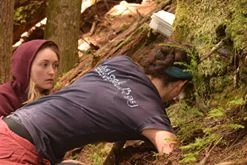
Ava & Viv, looking for Ancient Murrelets on Reef Island.
Maybe there are more places in the world than I imagine in which dense forest intimately meets the ocean's edge, but I cannot imagine one that matches the spirituality or diversity of this place. I had been forewarned of the captivating magic inherent to Haida Gwaii, yet I could never have predicted this. The two weeks I have spent with the Laskeek Bay Conservation Society has given me the opportunity to learn cultural and ecological histories, and engage in meaningful practices for a better, more harmonized future. In being so removed from the interruptions of civilization, the interconnected nature of the planet becomes so obvious.
It is a glorious privilege to spend time on East Limestone Island and learn from passionate individuals. Viv Pattison is a near-pocket-sized coastal angel, who seemingly has an endless wealth of knowledge and patience. Her respect for volunteers is apparent in the great deal of trust she places in them - no comment, question, or concern goes unacknowledged. James Mackinnon, as Andrea put it, is "the most sincere goofball" and an absolute pleasure to work alongside.
From excursions to Reef Island, to a day off on the skiff, to countless laughs and games of cribbage, my time here has been a blissful blessing. Who knew a girl could fall so madly in love with the mosses?! Thank you to all the wonderful people who helped turn a dream into reality. I hope to return next year (for the oyster catchers!)
Ava :)
Come see "The Messenger" at our AGM on April 19th!
We're excited to announce that for this year's AGM, we will be screening The Messenger, a feature documentary about our deep-seated connection to birds, and their uncertain fate. It was shown as part of the Haida Gwaii Film Festival, and we are excited to offer a second chance to see it with us!
- Date: Tuesday April 29, 2016
- Time: 7pm
- Location: Visitor Information Centre, Queen Charlotte
We hope you will join us for a fantastic movie, a brief overview of LBCS and snacks!
“Su Rynard’s wide-ranging and contemplative documentary THE MESSENGER explores our deep-seated connection to birds and warns that the uncertain fate of songbirds might mirror our own. Moving from the northern reaches of the Boreal Forest to the base of Mount Ararat in Turkey to the streets of New York, THE MESSENGER brings us face-to-face with a remarkable variety of human-made perils that have devastated thrushes, warblers, orioles, tanagers, grosbeaks and many other airborne music-makers.
On one level, THE MESSENGER is an engaging, visually stunning, emotional journey, one that mixes its elegiac message with hopeful notes and unique glances into the influence of songbirds on our own expressions of the soul. On another level, THE MESSENGER is the artful story about the mass depletion of songbirds on multiple continents, and about those who are working to turn the tide.
In ancient times humans looked to the flight and songs of birds to protect the future. Today once again, birds have something to tell us.”
Spring Cleaning Wishlist!
With our 2016 field season just around the corner, we're realizing there are a few bits and bobs our team needs down at the camp - and we suspect these things may be floating around in the homes of our supporters!
As you begin your spring cleaning, we're hoping you'll keep an eye out for these random household items. If anyone has spare or old versions of the following items, we'd be more than grateful if you donated them. Nothing needs to be in great quality - just workable. And, we'll happily issue tax receipts for items with a value of over $25!
Lindsay and Viv are usually in the office on Mondays and Tuesdays - but its best to send us an email (laskeek@laskeekbay.org) if you're going to swing by.
Thank you friends!
Our Wish List
- A toilet!
- Lighters
- Metal flipper/spatula
- Large plastic serving spoon/ladle
- Plastic spatulas
- Oven mitts
- Large dish gloves
- Cookbooks
- Marine mammal books
- Range finder
- A portable inverter
Community Appreciation Night - March 4th at the VIC
This past year, we received SO much support from our local community in advance of the World Seabird Conference. Now that Viv and Keith are back and our field season is just around the corner, we wanted to take a minute to say THANK YOU to everyone who has helped us out along the way. This night promises to be full of interesting speakers and stories - we hope you'll join!
New year, new field season - and we need volunteers!
Happy New Year! At the LBCS office in Queen Charlotte, we're excitedly working away on plans for our 27th field season on East Limestone Island. Vivian Pattison will be returning for another year as our Lead Biologist and Field Camp Supervisor, and we're currently in the process of recruiting an Assistant Biologist and a team of interns (applications due Feb 12). And of course, we're also looking for volunteers to join us!
Volunteers at East Limestone Island have the unique opportunity to immerse themselves fully in our field research and monitoring work. Depending on the week you choose, you may find yourself capturing and weighing Ancient Murrelet chicks, embarking on a sea survey or monitoring local song bird populations. As a volunteer, you will be trained by our resident biologists on various activities, before participating directly in them. It is an amazing opportunity to work at a remote research station in a pristine wilderness environment! Best of all? You don't need any experience to become one of our "citizen scientists"!
Interested? There is loads more information on our volunteering page, and you can check out weekly availability and activities on the 2016 field season schedule page. We do ask for a donation to help offset the costs associated with hosting volunteers, but this donation is tax deductible!
Final Notes on the World Seabird Conference
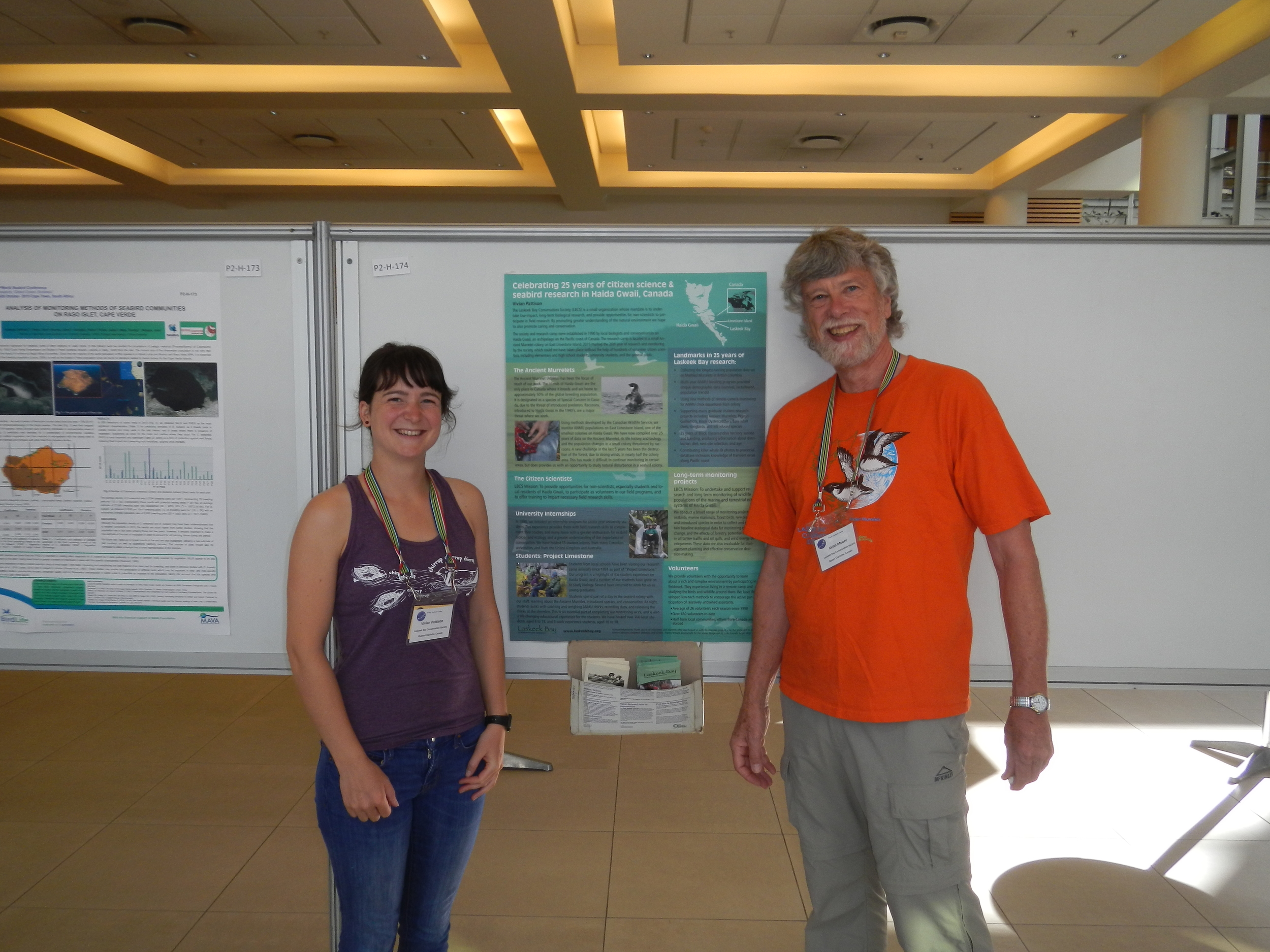
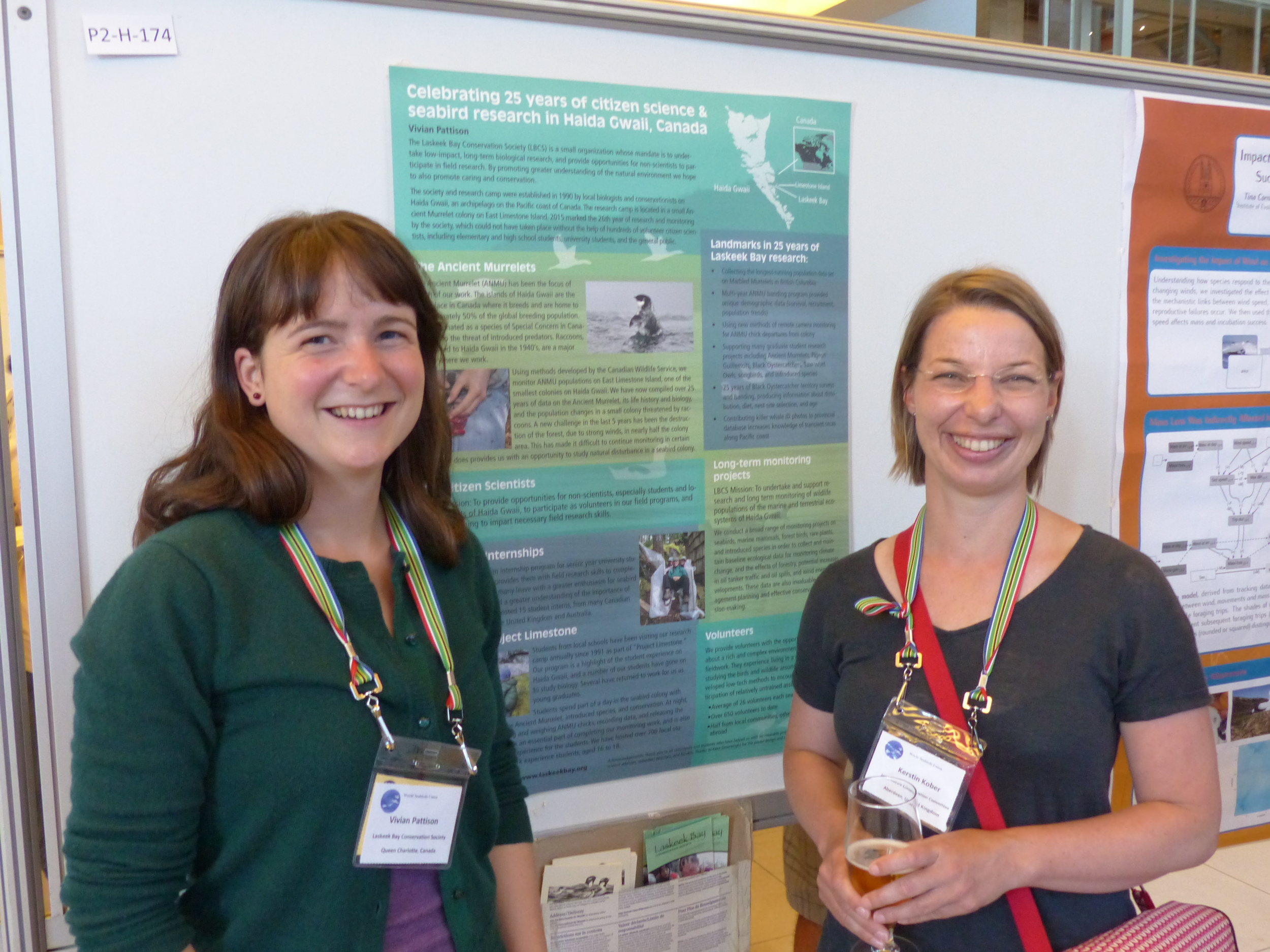
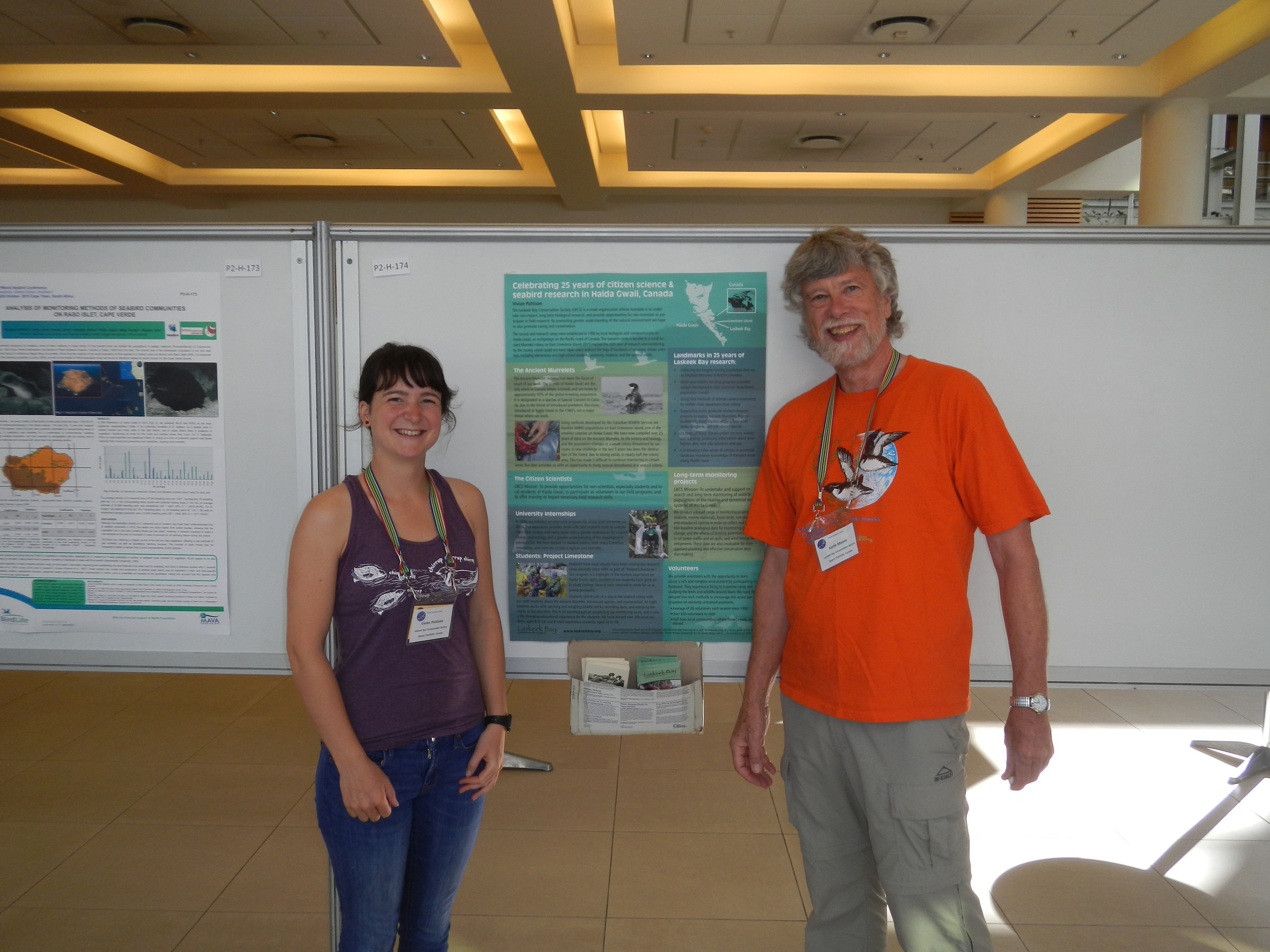
Keith and Viv have now wrapped up their time at the World Seabird Conference, and have been busily telling us about the connections made and ideas gained. With over 600 scientists, biologists, students, community activitists and representatives from environmental organizations spanning 52 countries, it was 3 rich days of learning and exchange. Keith's talk and Viv's poster on citizen science were both extremely well received, and we've been making plans for the 2016 field season based on what was learned.
“I learned a lot that we will be able to incorporate into planning for the future of LBCS, and I met so many people. It is important that the society continues to undertake relevant and important research, and with the new knowledge gained and new connections that we made I will be able to continue to help LBCS do this in the future.”
Presentations at the conference show that many of the seabird species in the world - the penguins, the albatrosses, the petrels, the terns and others - are in great trouble. They are impacted by global climate change, disappearing sea ice, warming ocean temperatures, diminished fish stocks, conflicts with fisheries and especially the impacts of introduced predators. Fortunately, much is now being done to find ways to address some of these threats and to improve and restore seabird colonies, especially through programs that connect scientists, local community activists and NGOs.
“What we are doing is very much in line with what is starting to happen with seabird conservation in many other parts of the world. Even at Limestone Island, and here on Haida Gwaii, we see some of the same impacts. Over the years, LBCS, in our small way, has pioneered an approach that is now being developed globally. It was very rewarding to see that we are part of a global network of people getting local communities more involved in the global environmental issues.”
A few resources from the conference that might be of interest...
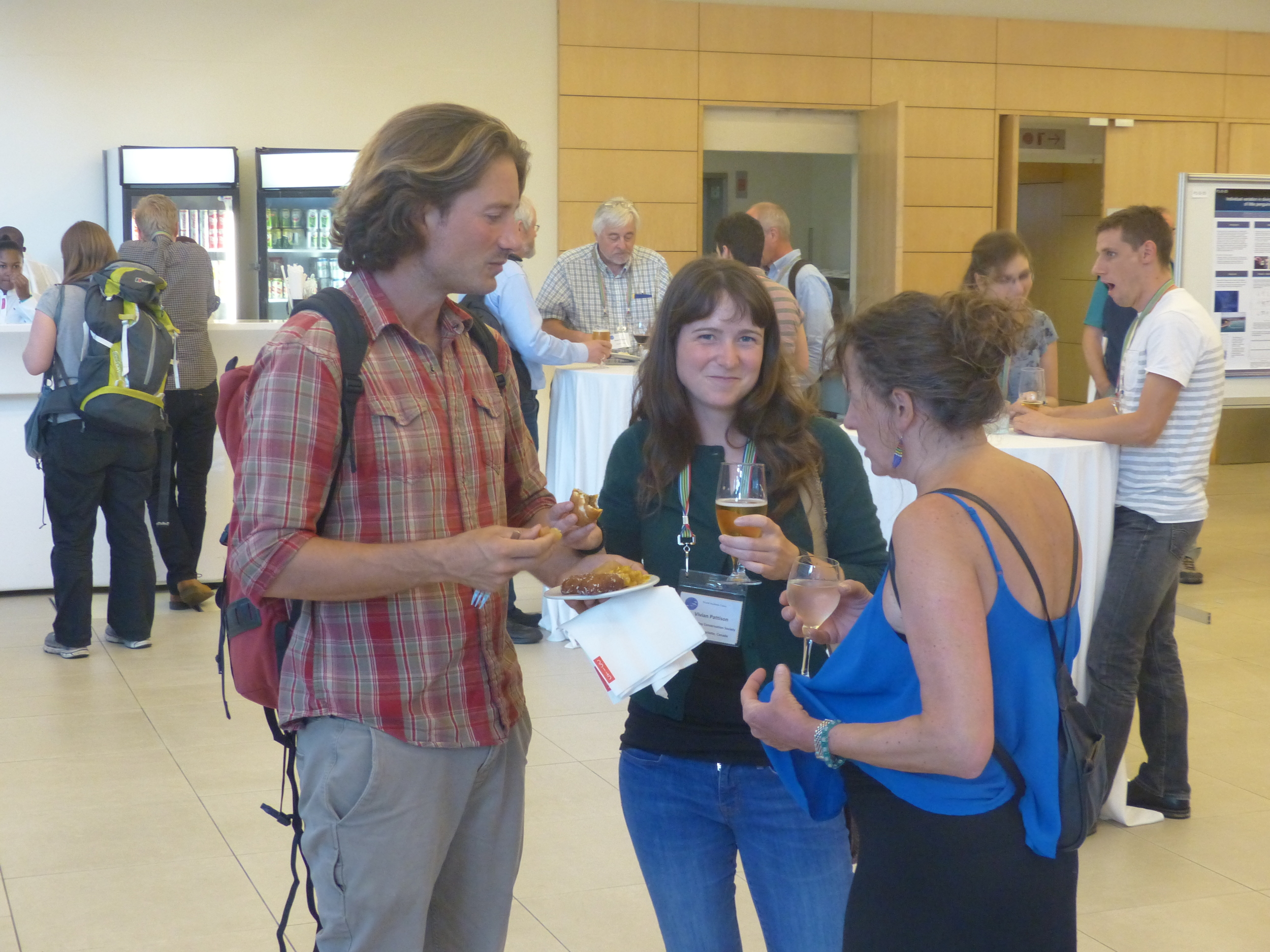
A great video by the World Seabird Conference highlighting some of the amazing seabird research going on around the world. Keith is near the end!
Days 3 and 4 at the World Seabird Conference
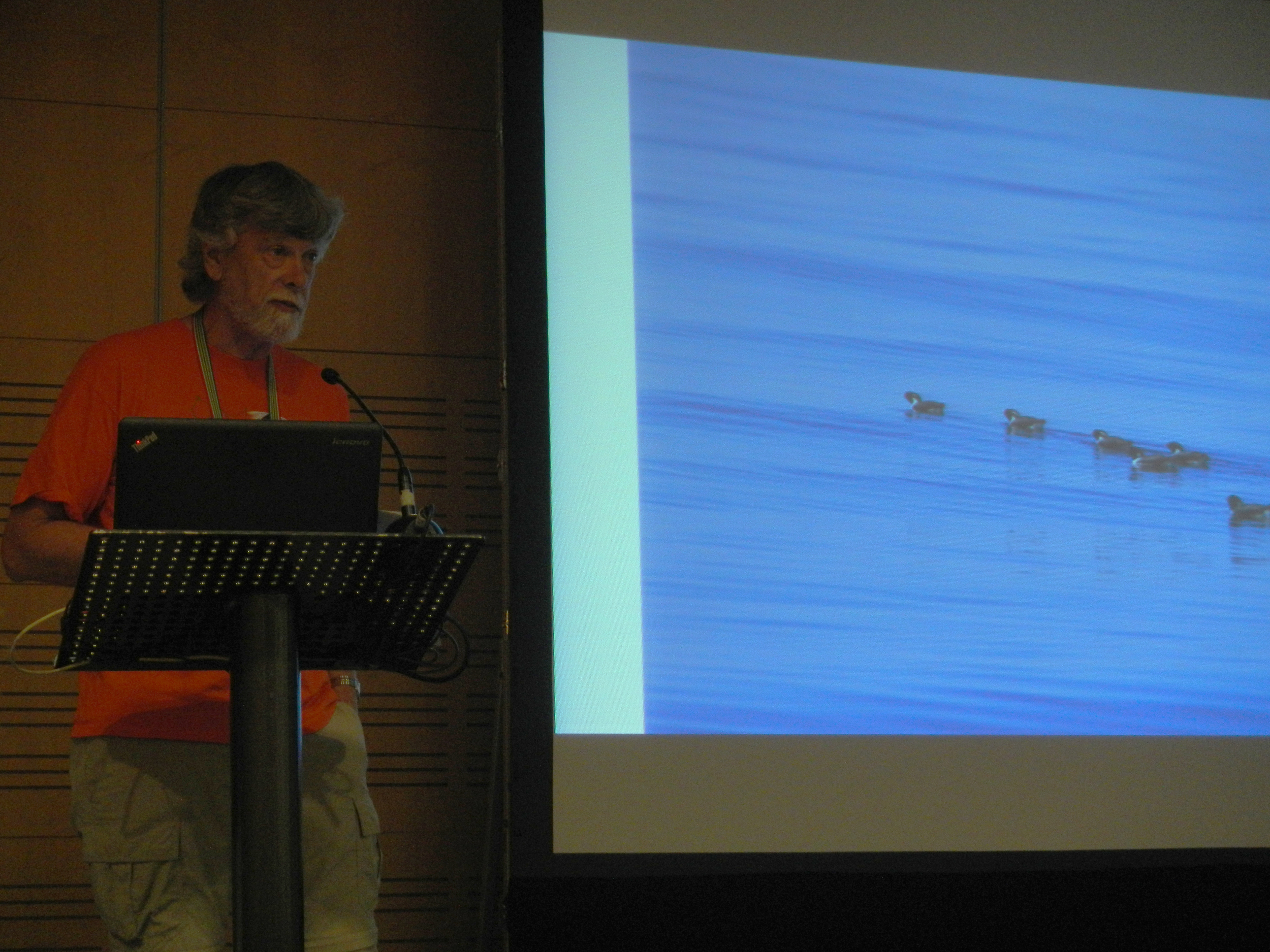
Hello again from Capetown. Day 3 was a big day for LBCS at the conference. Viv unveiled our poster in the morning and talked to many people through the day and at the reception in the evening. Keith did a 15 minute presentation to about 60 people as part of a 5 paper symposium entitled Community-Based Seabird Conservationand then joined a follow-up Discussion Workshop with about 15 people on this subject. It is pretty clear from both the responses to the poster and from the feedback following the presentation that LBCS is pioneering a program of community participation that is not yet common in the world, but that is increasingly seen as a model for an approach to island restoration and seabird conservation that increasingly needs to be adopted by the research and scientific communities in other parts of the world. We received praise from numerous people from different parts of the world and quite a few expressions of interest in our volunteer and internship programs. It was a fun day.
We actually met up with 4 different people who were, years ago, volunteers on Limestone, and who are now researchers working in different institutions in Canada and Europe. It was really rewarding to talk with them. We also talked with Ken Summers who did the first ANMU survey on East Limestone back in 1971 and CWS biologists and university profs who knew about what we do.

Friday featured some really good sessions on programs to eradicate invasive predators and restore seabird colonies and on the new global approaches to funding these programs. Many of the seabird populations in the world are in serious decline and in serious trouble, and seabirds dominate the IUCN red lists of threatened and endangered species – this as a consequence of many factors, but primarily invasive predators, over fishing of seabird food stocks, fisheries by-catch of seabirds in nets and on long-lines, and global warming. But the good news on Friday is that there are now quite a number of successes in eradicating various introduced predators and restoring and expanding seabird populations on over 1000 islands around the world. Islands Conservation is a big player in this around the world, and they mentioned LBCS a couple of time in presentations. In addition, there are many innovations to address the fishing issues, usually involving communities and fishermen. So all of these new approaches involve serious engagement with local communities, and there has been some significant change in the approach of researchers and scientists, even since the first WSC in Victoria in 2010.
Attending this conference has been a great experience for Keith and Viv. We have met and shared ideas with many people, and we are preparing ideas to share with LBCS directors and the community, and preparing for a strategy session in February 2016. We are already following up with some of the people we met.
Days 1 and 2 at the World Seabird Conference
Viv and I have now wrapped up two full days of sessions and symposiums at WSC2!

We have filled our days with presentations and workshops on topics ranging from the impacts of fisheries bycatch and windfarm development and ocean warming, to seabird navigation, the status of the worlds 22 penguin species and many other topics. There has also been lots of time for meeting up with people we already know, and meeting new people.
We both attended the opening video address by Jane Goodall, which was bothinspiring and a challenge to do more to protect the world seabirds.
LBCS was featured in a video compilation during that Opening Session - a video that Lindsay and Keith shot on Limestone this summer. Our main events happen tomorrow: Viv will set up the poster and will tell people all about LBCS when they visit it during the evening poster reception, and Keith will give the presentation, that he has been paring down to fit the (very short) 15 minute time slot! The presentation is part of session with people from Iceland, New Zealand, Chile and the US entitled "Community based Seabird Conservation".

It has been exciting to hear from many people who already know of Limestone Island and LBCS. There are past grad students who have worked on the island, and other researchers who have come to volunteer. We hope by the end of the week that even more people know who LBCS is and what we do!
Monday in Cape Town at the World Seabird Conference
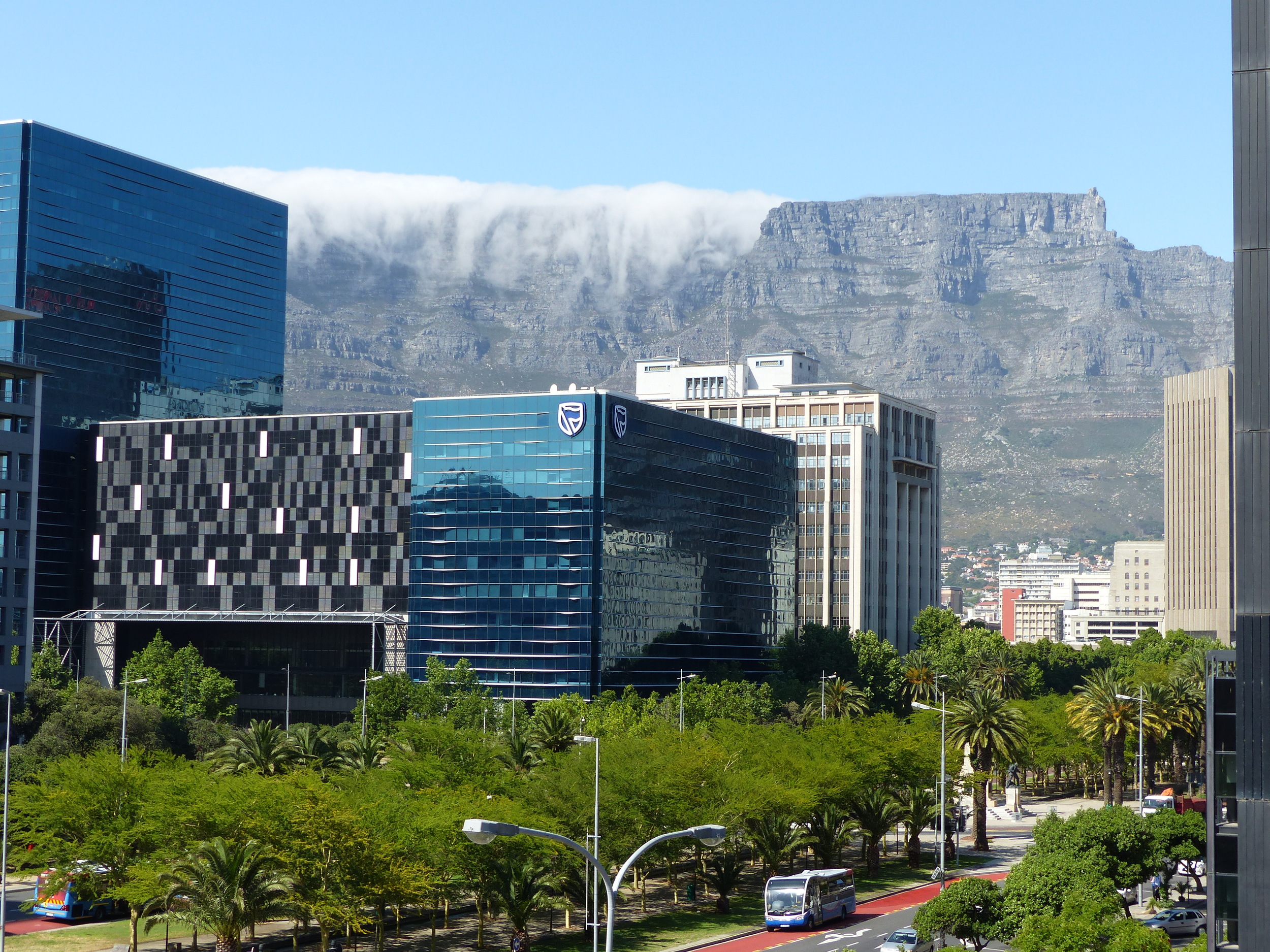
This week, Keith and Viv are at the World Seabird Conference in Cape Town, South Africa. This is a first update from Keith after their first day!
Hi - all friends of Laskeek Bay Conservation Society - Viv and I and our partners Ryan and Helen have all arrived safely in Cape Town. Tonight we attended the Opening Reception for the Conference which opens tomorrow. Lots of people, good food and some very vigorous drumming to open the event. Tomorrow morning we get serious.
The Registration desk tells us that there are almost 600 people registered from 55 countries. The program is a daunting 56 pages with a total of 500 presentations and posters in many interesting sessions. It will be fun, and we hope to learn a lot to bring home to inform our on-going programs at Limestone.
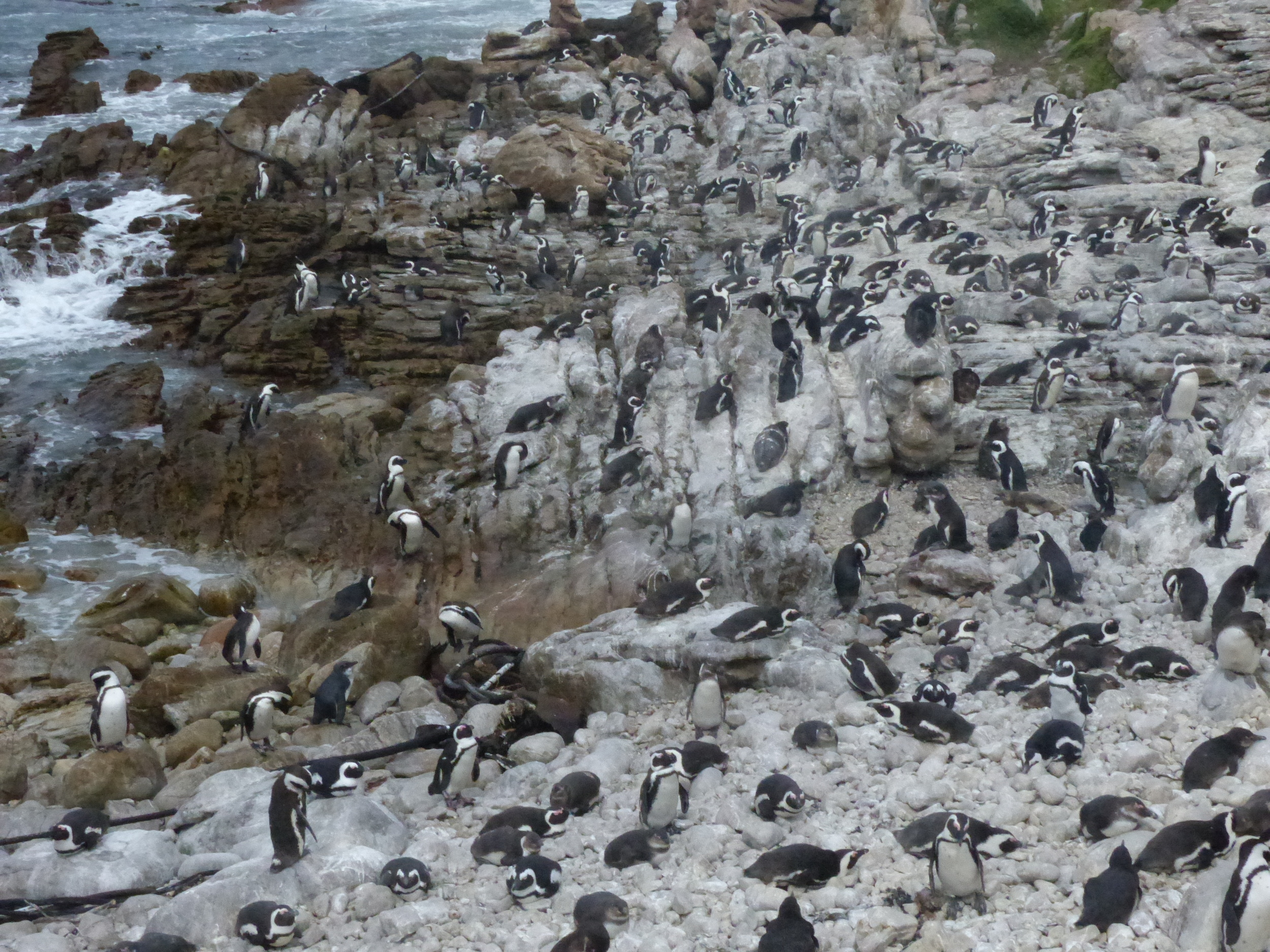
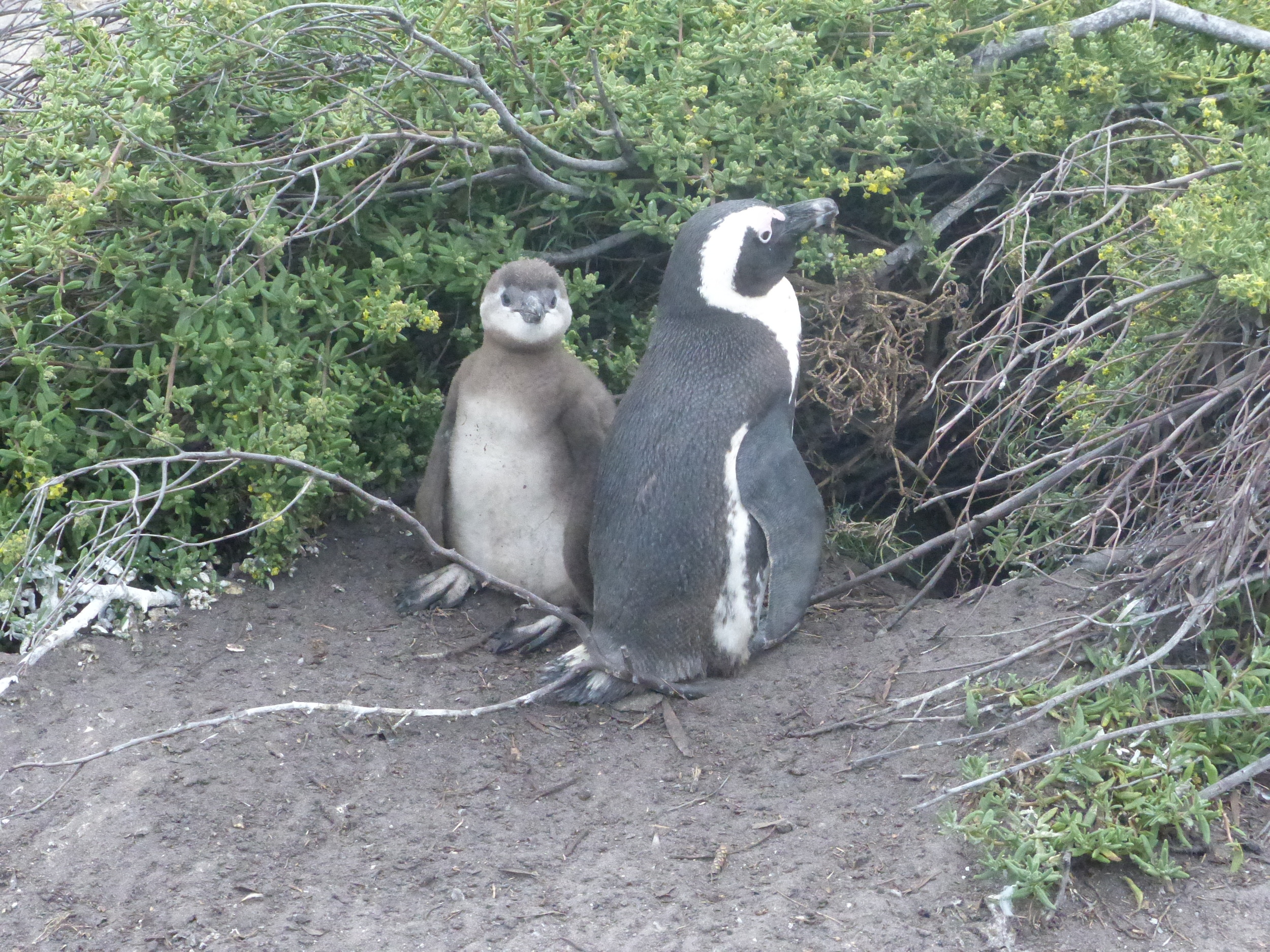
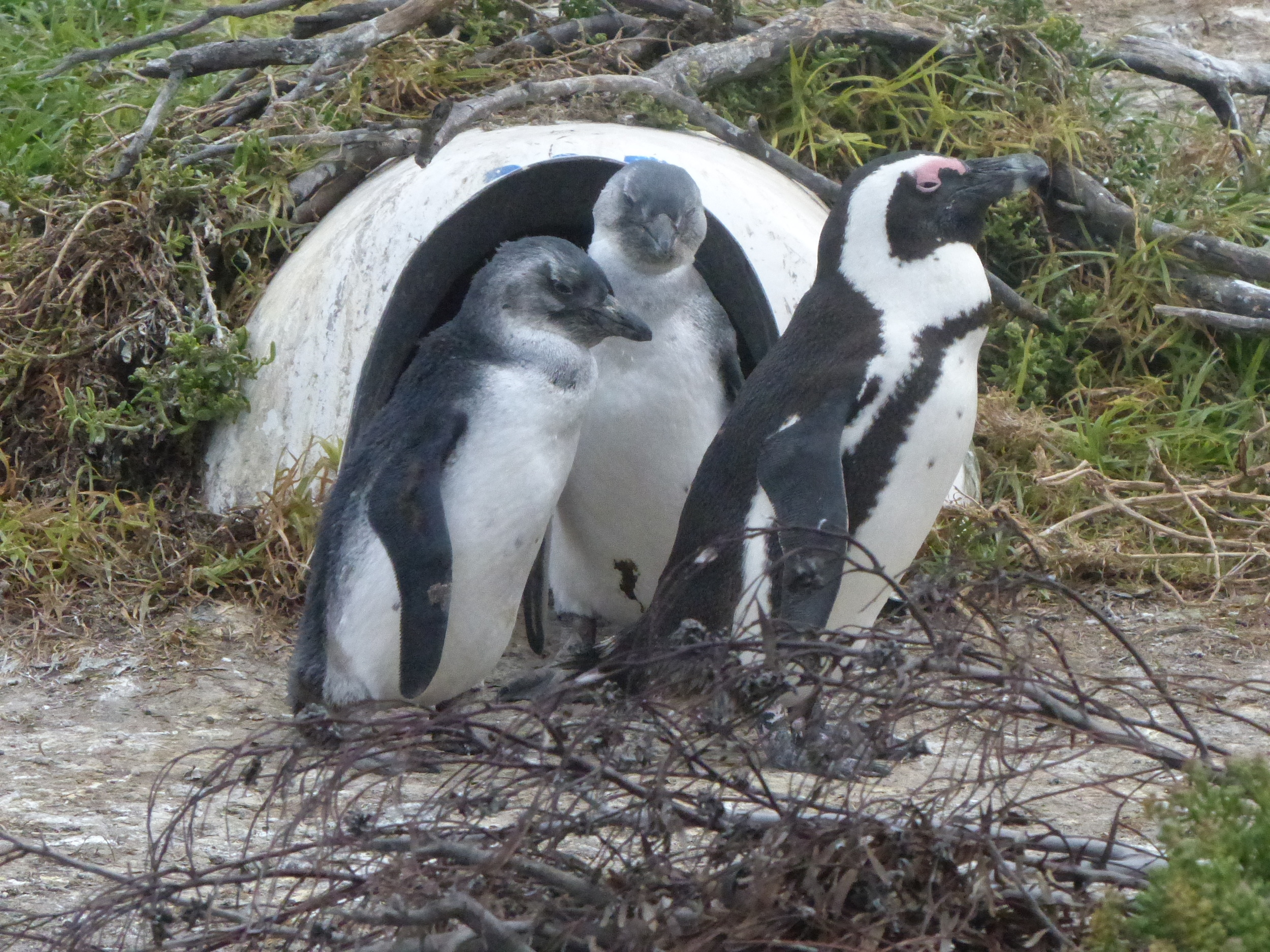
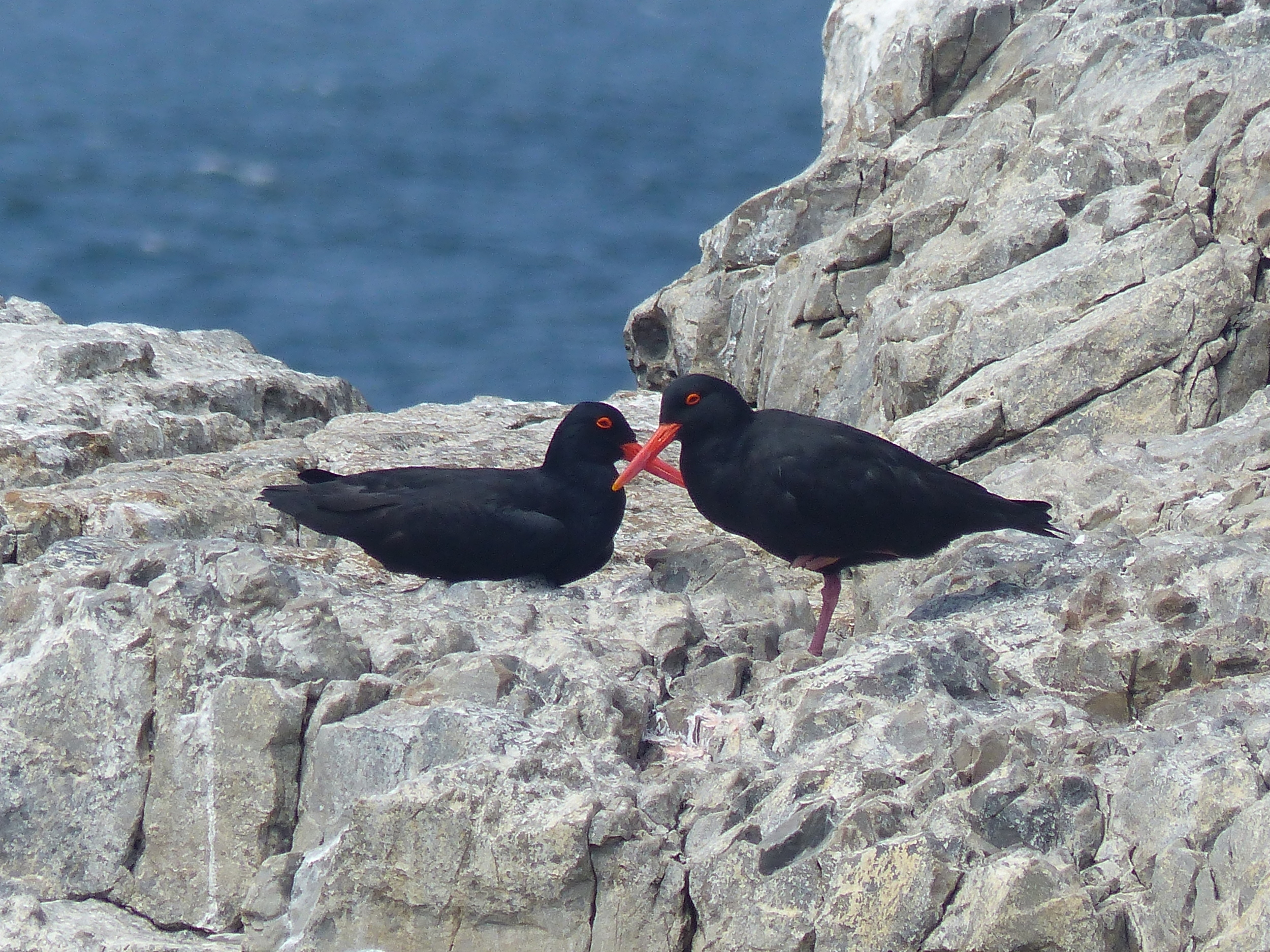
South Africa has penguins and we have visited the colonies of the wonderful little African Penguins close to Capetown. The biggest colony is about 2000 birds. It was a busy place on the blustery day we visited, smelling much like a very odorous Cassins Auklet colony, with lots of young and many little artificial shelters to create additional habitat. Africa also has black oystercatchers, looking very much like our own Haida Gwaii BLOY. And of course we have taken the opportunity to visit game parks, looking at elephants, rhinos and the many beautiful birds. I did a safari on foot with armed Zulu guides; Viv did a horseback safari. Lots of pictures.
More on the conference later. Thanks again for all your work and support to get us here.
A great evening with great company and great food!
This note was written by Viv Pattison following Saturday night's African stew feast. Thank you to all who attended and all who have supported us as we prepare for the World Seabird Conference!
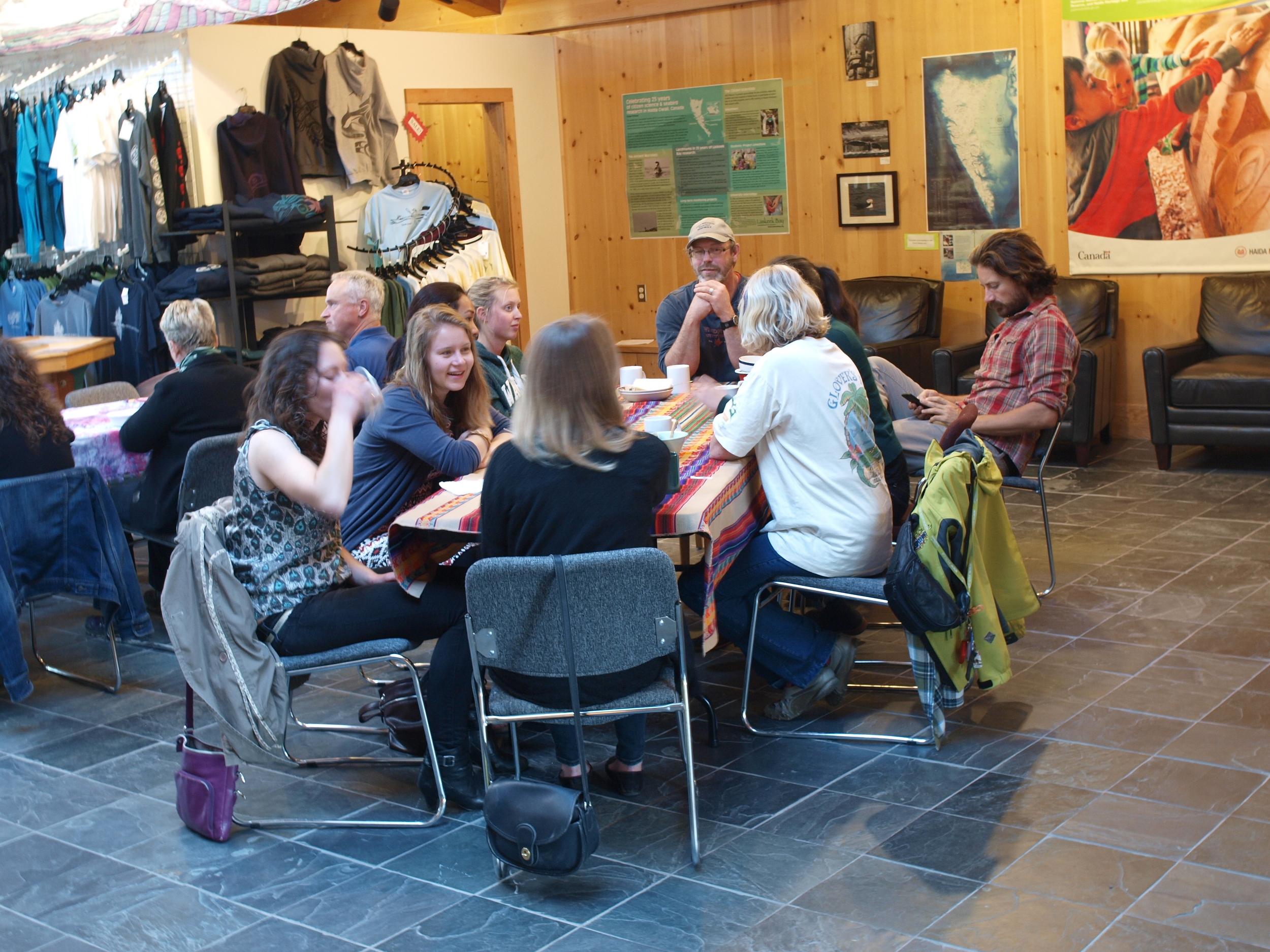
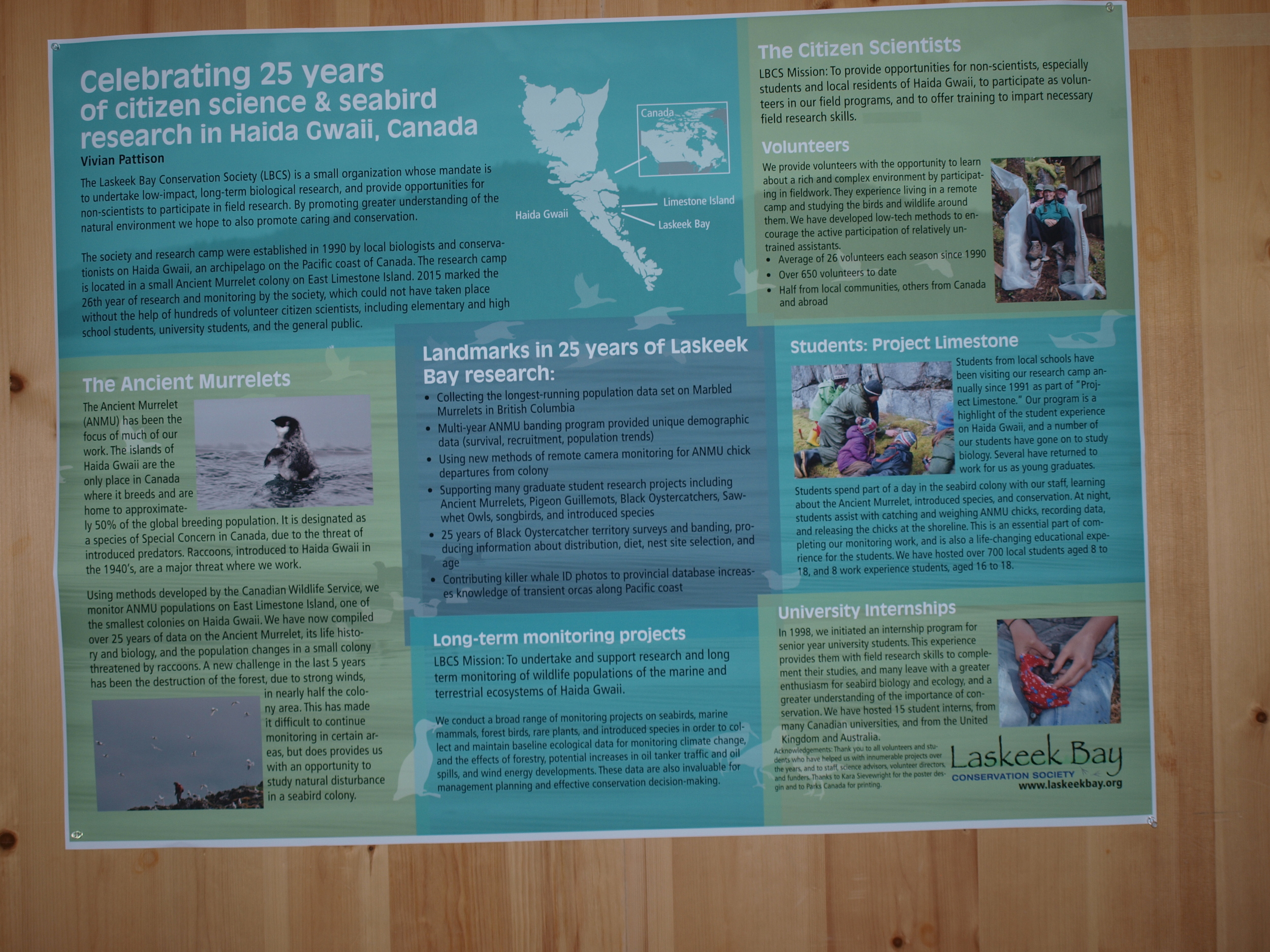
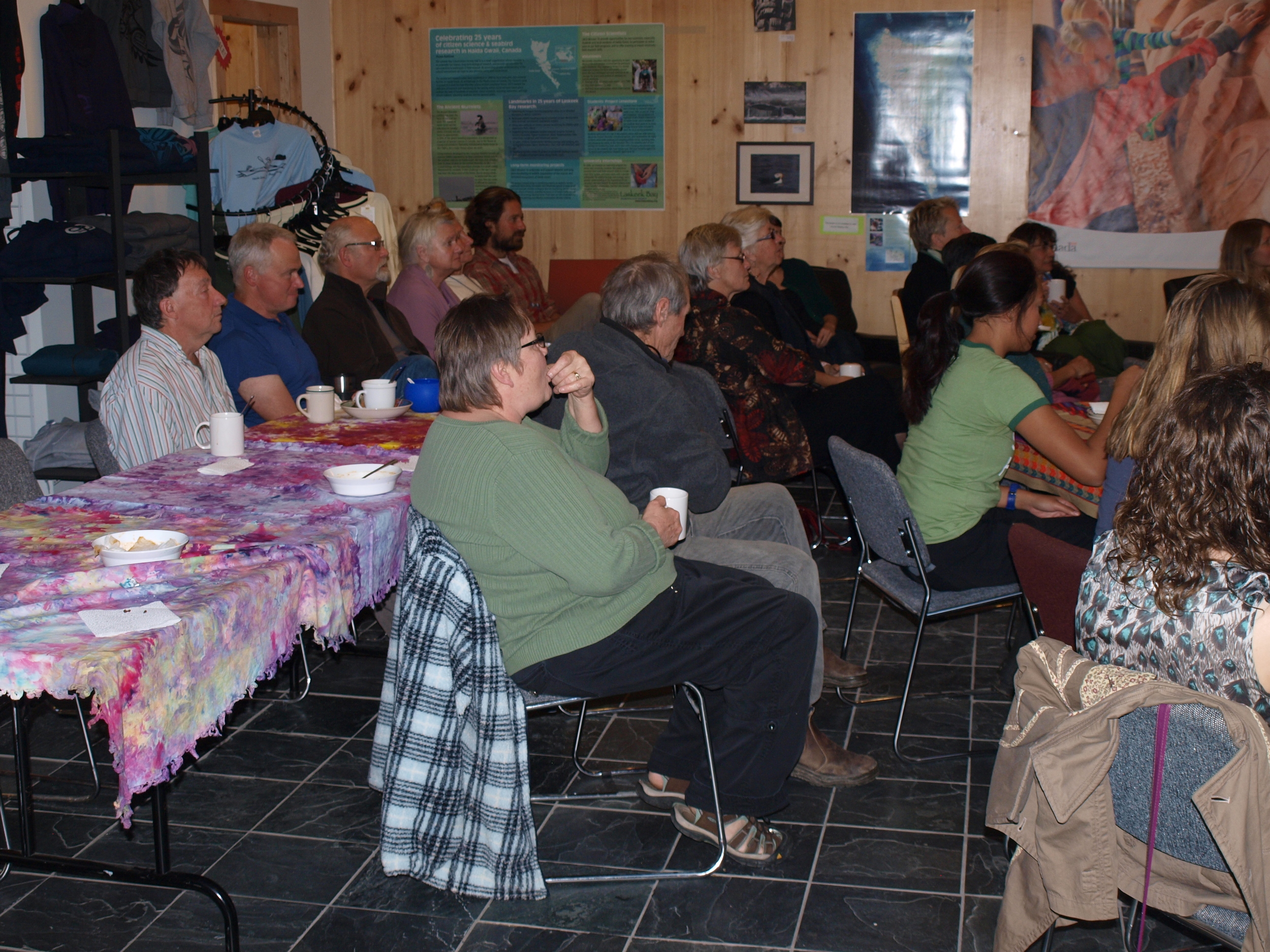
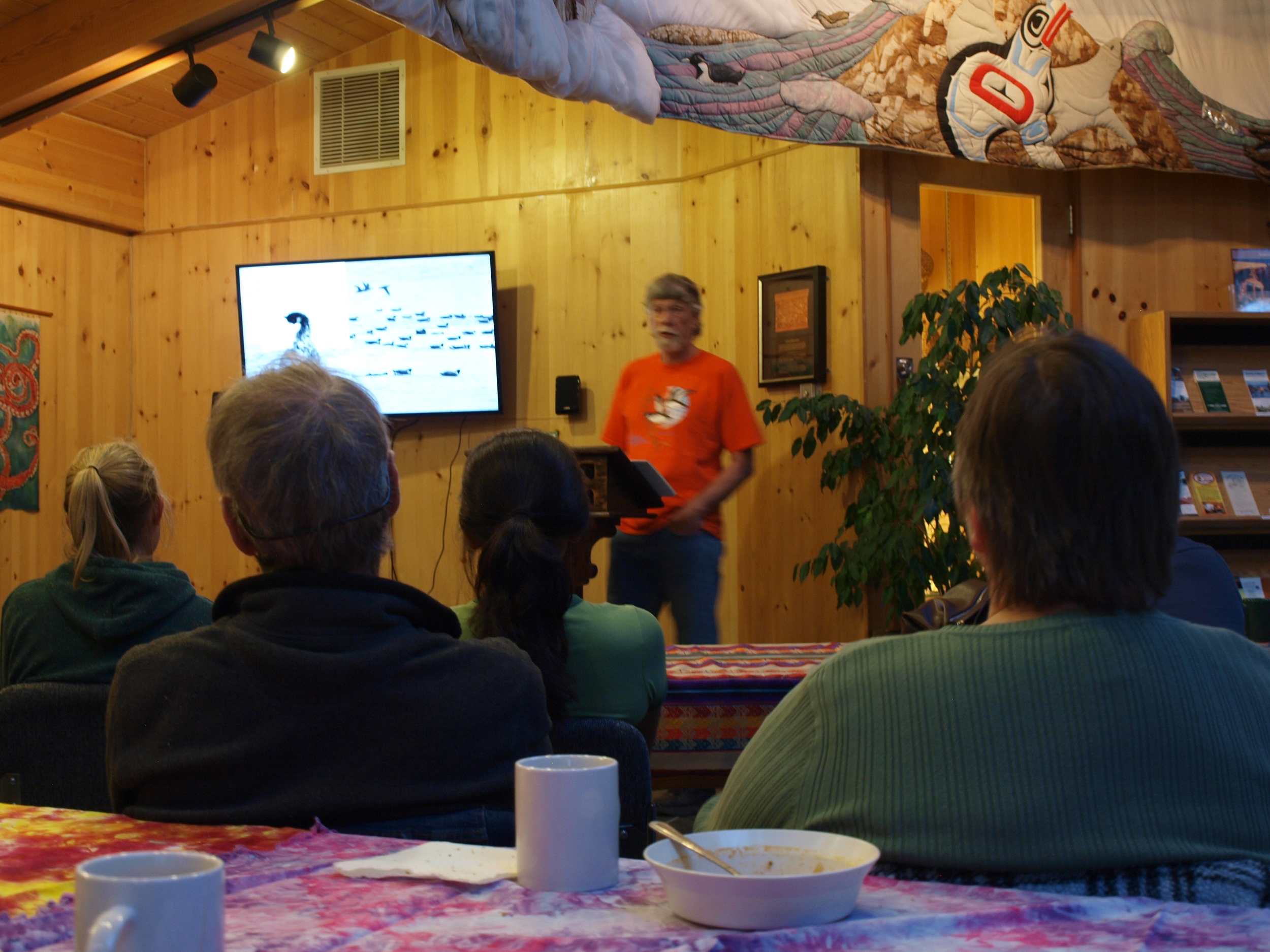
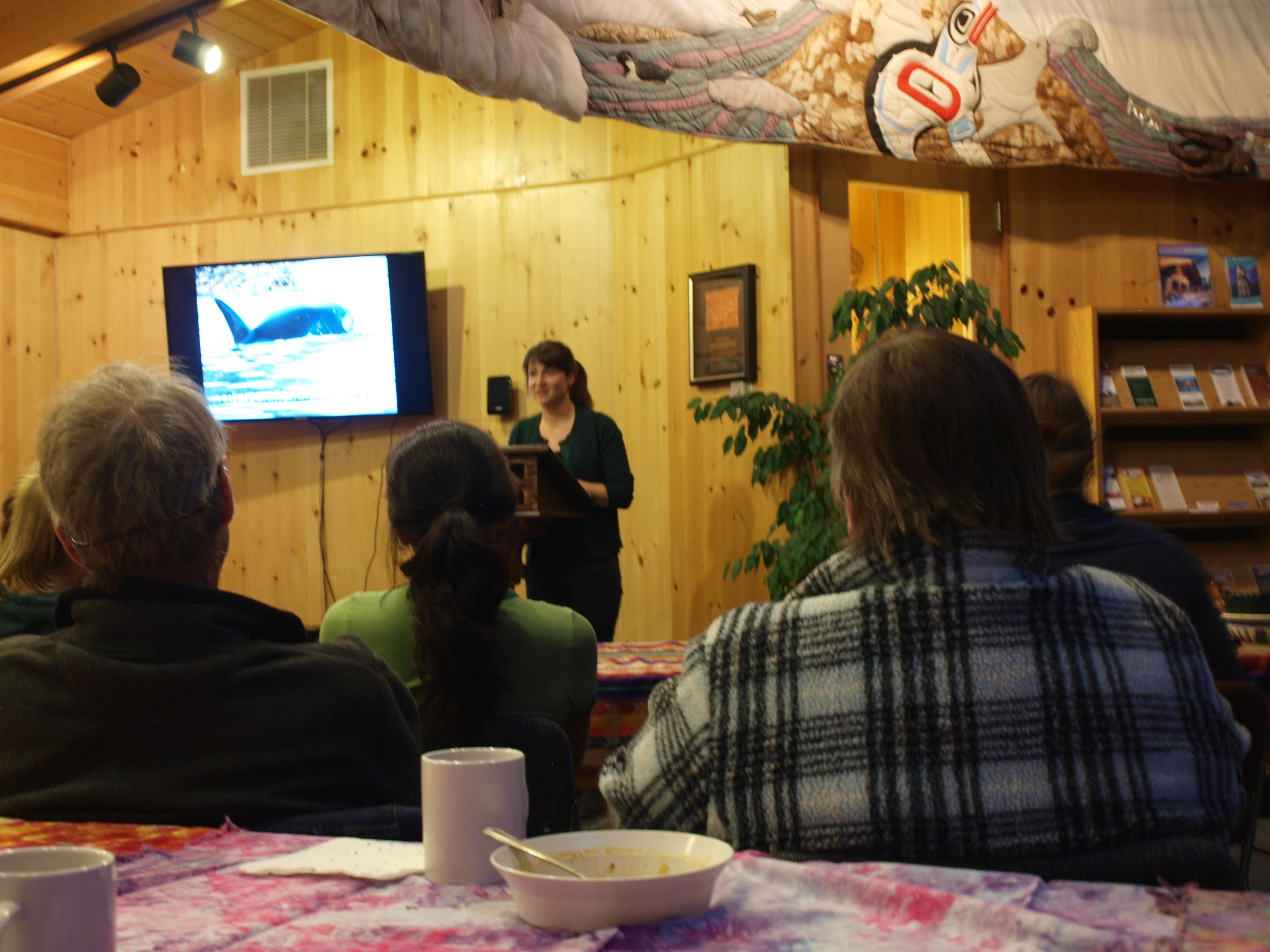
Thanks to everyone who came out on Saturday to our presentations and African stew feast! We had an excellent African Peanut Stew, made by Maureen Weddell, and many other goodies to go along with it. After dinner, everyone gathered around to hear Keith’s run-through of the presentation he will be giving to an international audience at the Second World Seabird Conference in Cape Town at the end of October, and to take a look at the poster that I will be presenting during two days of the conference.
Keith talked about the many activities we have been doing over the years, from seabird studies to invasive plant pulling, and also highlighted the fact that we could never have done all this without the hundreds of volunteers who have donated time and energy over the years. My poster also summarizes our activities and the involvement of volunteers and students from local schools. For this local event, I also talked about our 2015 field season, and showed photos of some of the interesting sights we saw, and some of the amazing wildlife we got to interact with in the spring.
It is very exciting that our small organization was accepted to present twice at the conference, as we anticipate that it will be a big gathering. The first World Seabird Conference, in 2010, had over 800 participants from 50 different countries!
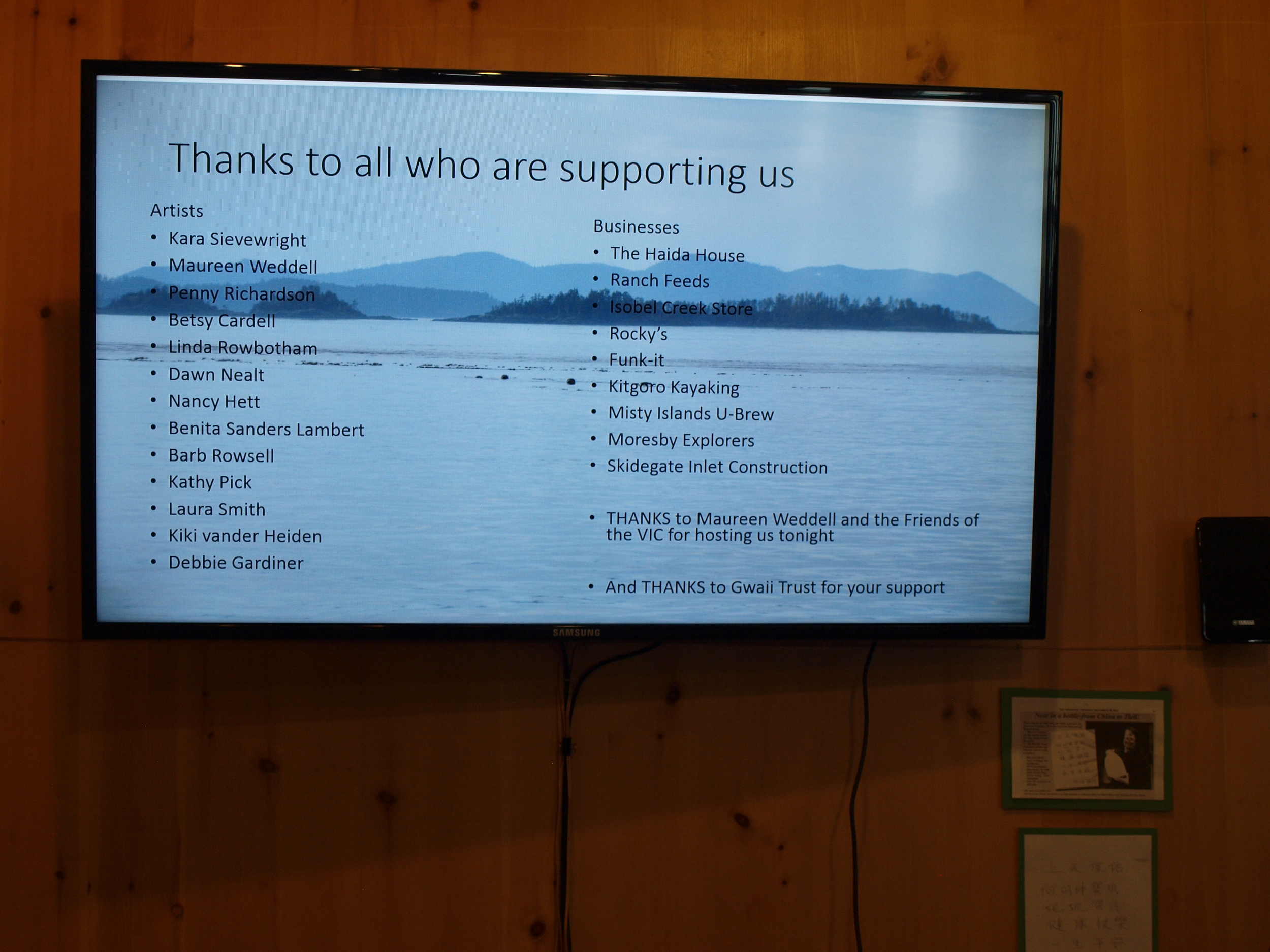
Thanks again to everyone who has supported our fundraising efforts. Thanks to Maureen at the Visitor Info Centre for hosting and cooking, thanks to others who brought food, and thanks to an attentive audience of long-time supporters, past volunteers, and potential future volunteers! If you want to check out the poster that will be on its way to South Africa shortly, it will be displayed at the Visitor Info Centre until early October.